A small apartment can look charming in the afternoon sun, then feel completely different once the ceiling light turns on at night.
Suddenly, the sofa, dining table, desk, bed, and entryway are all equally bright. Nothing has a clear focus. The room is visible, but it can feel flatter, busier, and less finished.
The issue is not always a lack of light.
It is often a lack of boundaries.
Small apartments rarely fail because they are too small. More often, they fail because everything starts to blend together. The sofa is also the movie area. The dining table may also be the work desk. The bedroom corner might also be where packages land. In daylight, that overlap can feel casual and flexible. At night, one overhead light can make it all feel like one undefined space.

A small apartment needs lighting that does more than make things visible. It needs lighting that tells the room where one activity ends and another begins: where you eat, where you rest, where you work, and where the evening slows down.
That does not mean filling the room with lamps. In a small space, too many fixtures can create clutter just as easily as too many chairs or side tables. The goal is simpler: use light with intention.
A well-placed glow can give a small apartment shape.
Most apartments come with some kind of overhead light. It might be a flush mount in the living room, a basic ceiling fixture in the bedroom, or a single light near the entry. It does the practical job of lighting the space, but it usually does not help the space feel designed.
That is because overhead light spreads from above and often treats the whole room the same way.
The sofa, coffee table, desk, dining corner, and walkway are all lit at once. Nothing stands out. Nothing feels especially inviting. The room may be bright, but it can also feel flat, especially after sunset.
In a larger home, separate rooms naturally create boundaries. A dining room has walls. A bedroom has a door. A hallway leads somewhere. In a small apartment or studio, those divisions are often missing. The floor plan stays open, which is useful, but it also means the space depends more on visual cues.

Lighting is one of the easiest cues to use.
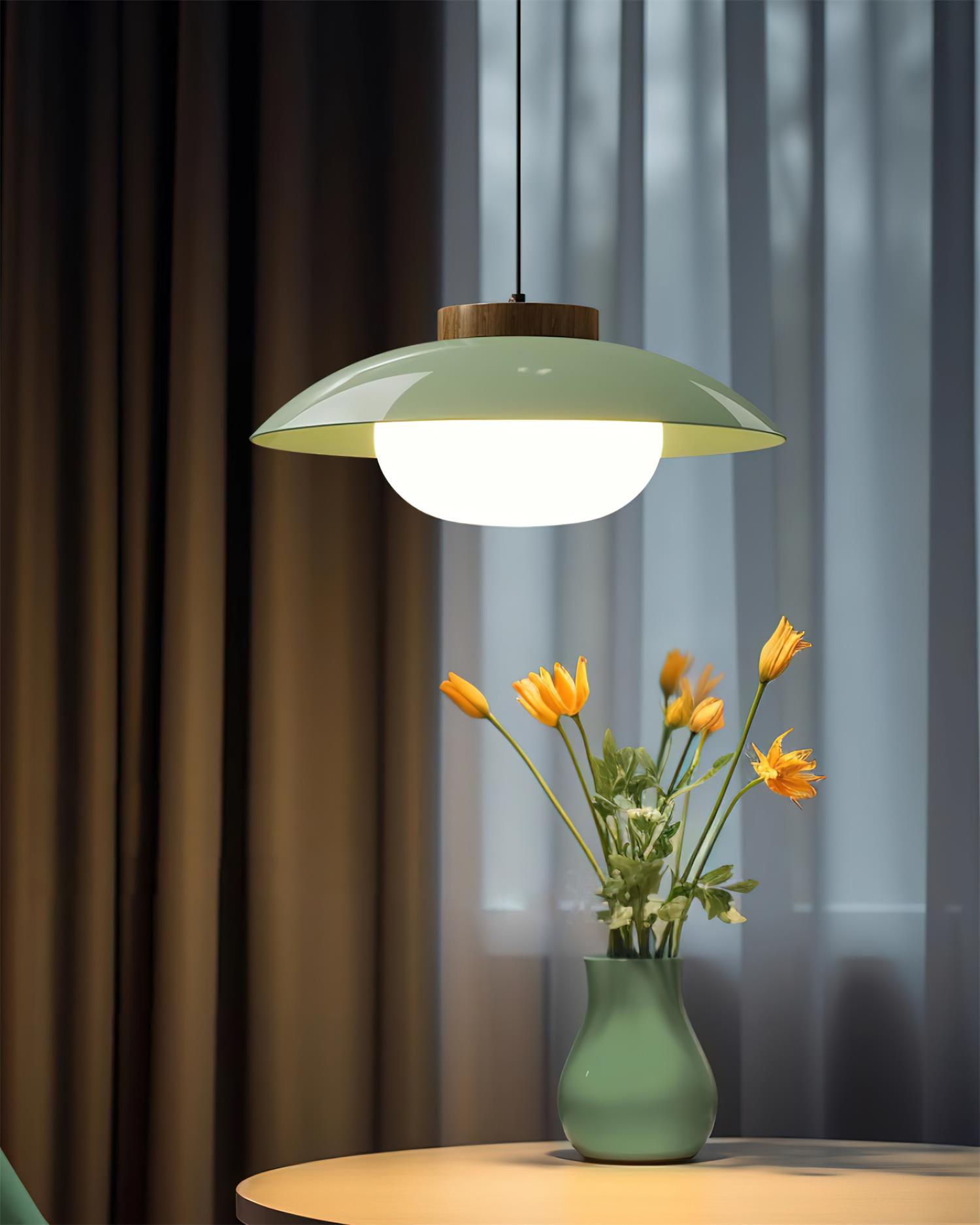
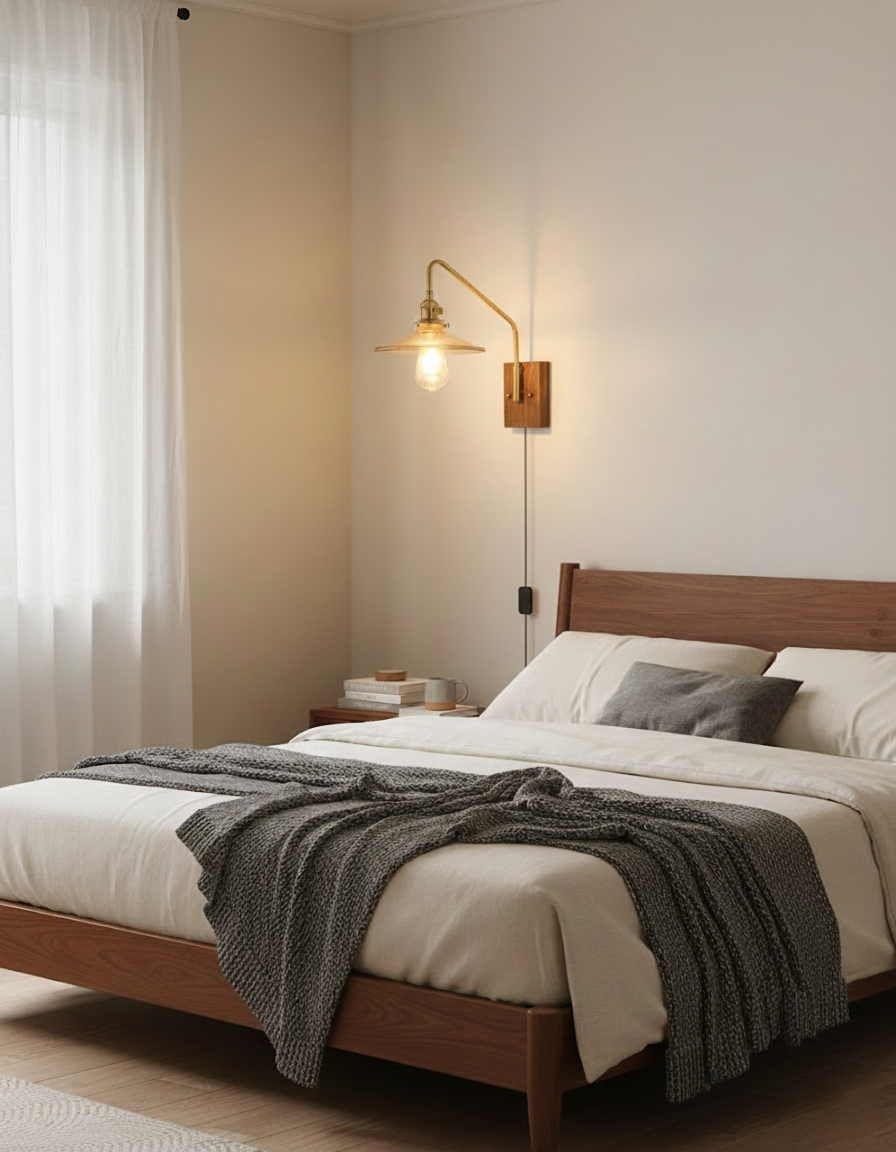
A pendant over a small table can make that corner feel like a dining area. A low lamp beside the sofa can turn one side of the room into a place to unwind. A wall light near the bed can make a sleeping area feel more settled, even if it is only a few steps from the living space.
The room does not need to be rebuilt. It needs a clearer rhythm.
Good small-apartment lighting does not have to be dramatic. It just has to be specific.
Think of light as a way to draw soft, invisible lines inside the room. A warm pool of light can mark a dining spot. A shaded lamp can anchor the sofa. A focused desk light can make work feel separate from the rest of the evening.

These boundaries do not block the space. They organize it.
That matters because small apartments often ask one room to do several jobs. Without lighting zones, everything feels like it is happening everywhere. With lighting zones, each area gets a purpose.
The change can be subtle, but it affects how the apartment feels in daily life. You feel it when you eat dinner without the whole room glaring above you, sit down with a book, or turn off the desk lamp and let work fade into the background.
Lighting helps the room shift with you.
When people think about defining a space, they often imagine strong contrast: brighter light, sharper shadows, obvious separation. But in a small apartment, hard divisions can make the room feel chopped up.
Soft boundaries usually work better.
A gentle side glow, a shaded table lamp, a wall light that washes across a surface, or a small pendant that creates a warm circle over a table can separate a zone without making the apartment feel smaller.
The goal is not to spotlight every corner. It is to bring light closer to the places where life actually happens: the sofa, the table, the bedside, the desk, the chair by the window.
That is why one carefully placed lamp can sometimes do more for the mood of a room than a brighter ceiling fixture. It creates a place to be, not just a room to see.
Not every corner needs its own light. In fact, lighting every part of a small apartment can make it feel busy. The better approach is to look at where your day naturally changes.
Start with the areas that do different jobs.
The Sofa Edge
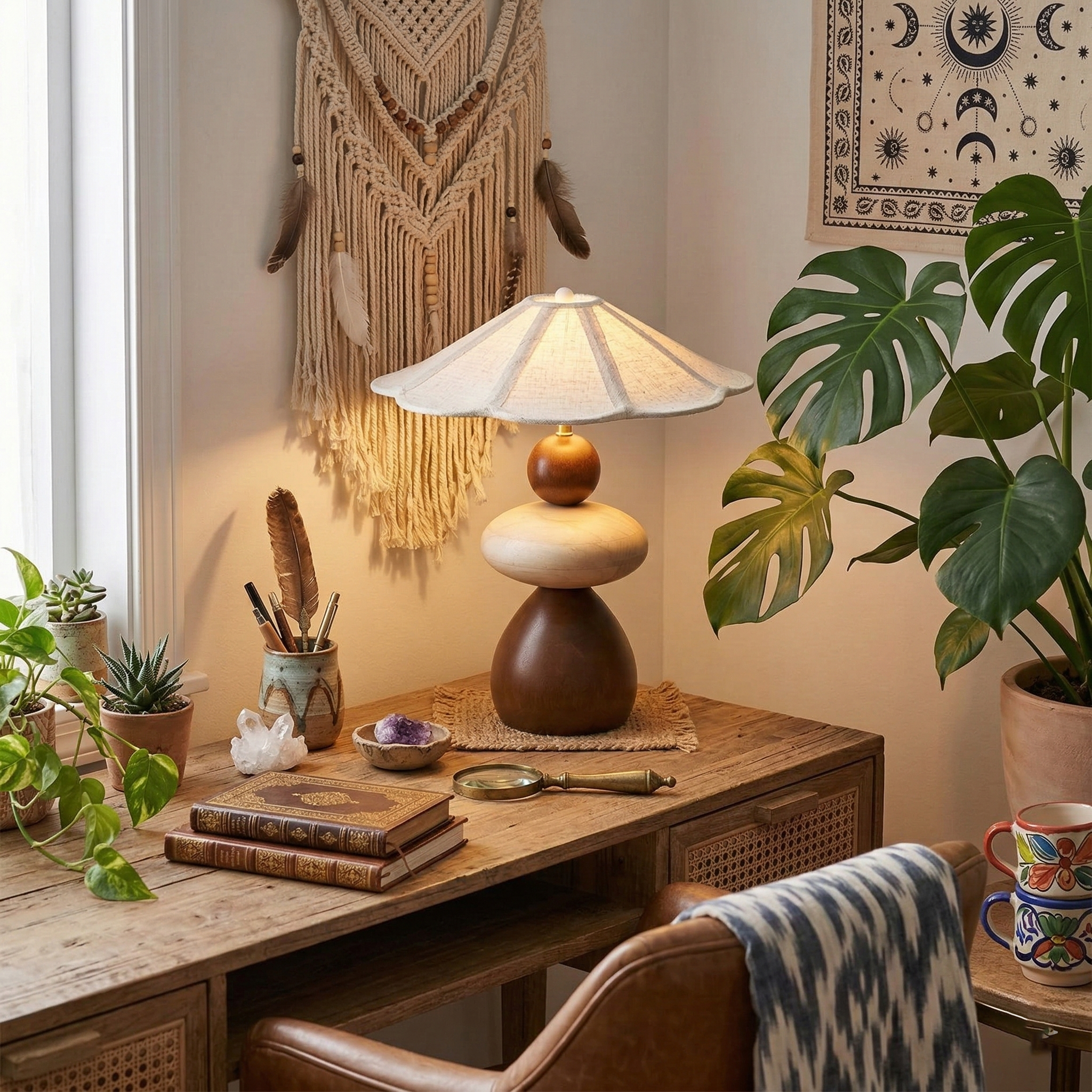
The sofa is often the main living area in a small apartment, but it can easily disappear into the rest of the room. A lamp near one end of the sofa gives that area a center of gravity.
It can make the space feel more like a living room, even if the “living room” is only one side of an open layout.
The light does not need to be large. A compact table lamp, slim floor lamp, or softly shaded accent lamp can be enough. What matters is that the glow gathers attention around the seat you actually use.
That warm pool of light makes the sofa area feel ready for reading, watching a show, or relaxing without turning on the entire apartment.

The Dining Nook
Small dining areas often feel accidental. A round table near a window, a bistro table against a wall, or a small setup between the kitchen and living area can look temporary if nothing defines it.
Lighting changes that.
A pendant above the table, a plug-in pendant near the wall, or even a small lamp placed close to the dining surface gives the area a reason to exist. It makes even a simple meal feel more deliberate.
The table stops looking like extra furniture and starts feeling like its own moment.
This is one of the clearest examples of lighting as a boundary. The glow marks the table without needing walls, a rug, or a larger footprint.

The Bedside Wall
In a studio or small bedroom, the bed can dominate the space. The right bedside light can make the sleeping area feel calmer and more contained.
Instead of relying on one overhead fixture, a soft light near the bed creates a slower transition into the evening. A wall sconce, plug-in wall lamp, or small bedside lamp can help separate the bed from the rest of the apartment, especially when the room has to serve more than one purpose.
A bedside zone does not have to be symmetrical or formal. What matters is that the light supports the way the space is used at night.
It should feel quiet, close, and easy to reach.

The Desk Corner
A desk in a small apartment often has to fight for identity. It may sit in the living room, beside the bed, or along a hallway wall. Without lighting, it can feel like a surface that never fully belongs.
A focused lamp gives the desk a clearer role.
It signals work time when it is on and lets the area recede when it is off. That shift is useful in any home, but especially in a small apartment where work and rest can blur too easily.
Good desk lighting should not make the whole room feel like an office. A small task lamp, adjustable table lamp, or focused side light can create enough clarity for work without taking over the apartment.
The desk needs focus, not glare.

Small-space lighting works best when every fixture has a purpose. Here are a few common mistakes that can make an apartment feel flatter, busier, or less comfortable.
| Mistake | Better Move |
|---|---|
| Relying on one overhead light | Add smaller lights for sofa, table, bedside, or desk |
| Adding lamps without a purpose | Give each light a clear job |
| Using bulbs that feel too cool | Choose warm white bulbs |
| Choosing the wrong scale | Pick visible but not bulky fixtures |
| Ignoring where the light lands | Think about the glow before the fixture |
The point is not to add more light everywhere. It is to make each light support a specific part of daily life.
It is easy to assume a small apartment needs more storage, more decor, more furniture, or brighter bulbs to feel finished. Sometimes it does. But often, the missing piece is simpler.
The room needs better boundaries.
Not hard boundaries. Not walls. Not a complete redesign.
Just enough light to give each part of the apartment a purpose.
Start with one corner: a sofa lamp, a dining pendant, a bedside wall light, or a focused desk lamp. One thoughtful light can change how a small apartment feels after sunset.
Brightness lets you see the room.
Boundaries help you live in it.
Comments will be approved before showing up.