A small apartment can look charming in the afternoon sun, then feel completely different once the ceiling light turns on at night.
Suddenly, the sofa, dining table, desk, bed, and entryway are all equally bright. Nothing has a clear focus. The room is visible, but it can feel flatter, busier, and less finished.
The issue is not always a lack of light.
It is often a lack of boundaries.
Small apartments rarely fail because they are too small. More often, they fail because everything starts to blend together. The sofa is also the movie area. The dining table may also be the work desk. The bedroom corner might also be where packages land. In daylight, that overlap can feel casual and flexible. At night, one overhead light can make it all feel like one undefined space.

A small apartment needs lighting that does more than make things visible. It needs lighting that tells the room where one activity ends and another begins: where you eat, where you rest, where you work, and where the evening slows down.
That does not mean filling the room with lamps. In a small space, too many fixtures can create clutter just as easily as too many chairs or side tables. The goal is simpler: use light with intention.
A well-placed glow can give a small apartment shape.
Most apartments come with some kind of overhead light. It might be a flush mount in the living room, a basic ceiling fixture in the bedroom, or a single light near the entry. It does the practical job of lighting the space, but it usually does not help the space feel designed.
That is because overhead light spreads from above and often treats the whole room the same way.
The sofa, coffee table, desk, dining corner, and walkway are all lit at once. Nothing stands out. Nothing feels especially inviting. The room may be bright, but it can also feel flat, especially after sunset.
In a larger home, separate rooms naturally create boundaries. A dining room has walls. A bedroom has a door. A hallway leads somewhere. In a small apartment or studio, those divisions are often missing. The floor plan stays open, which is useful, but it also means the space depends more on visual cues.

Lighting is one of the easiest cues to use.
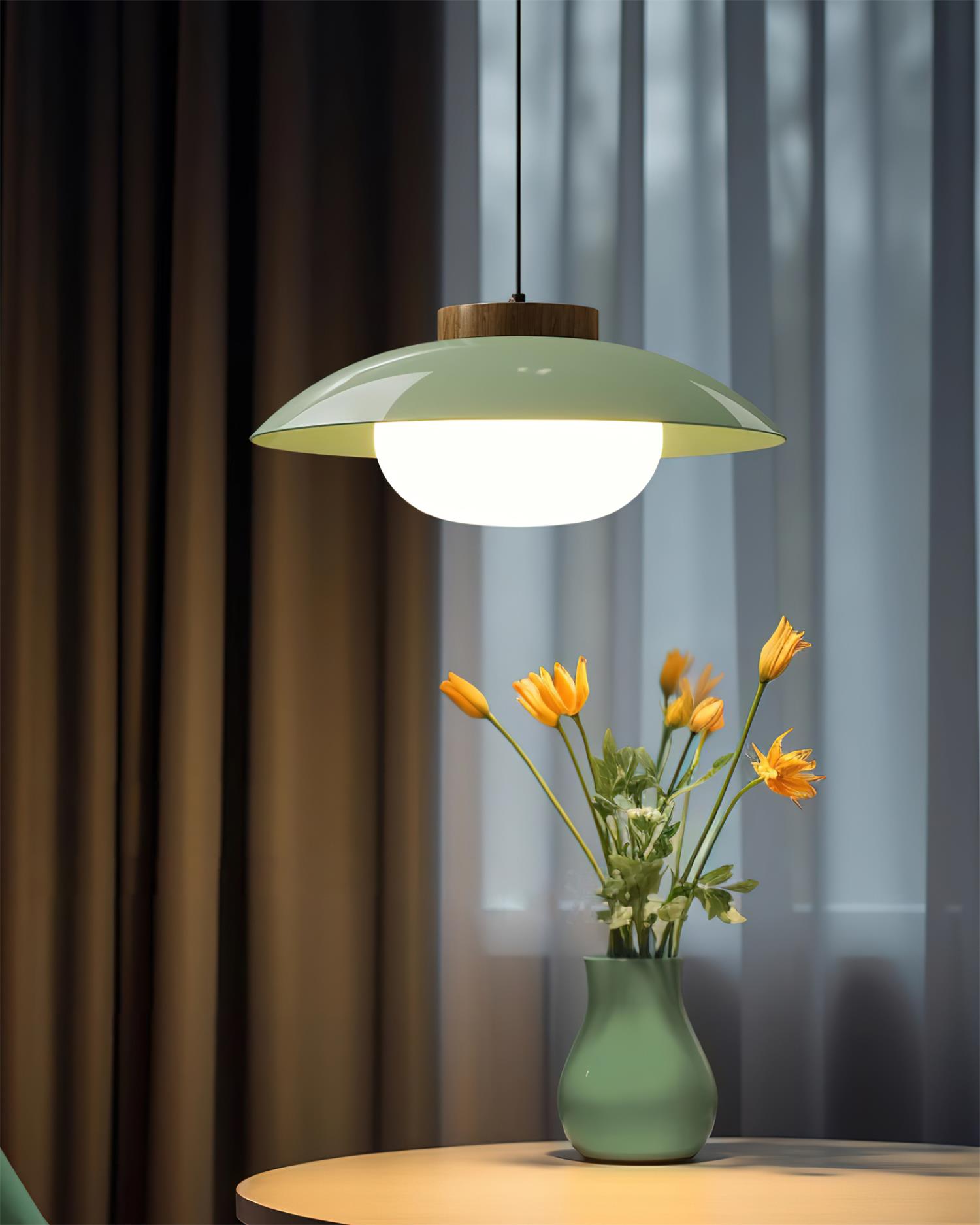
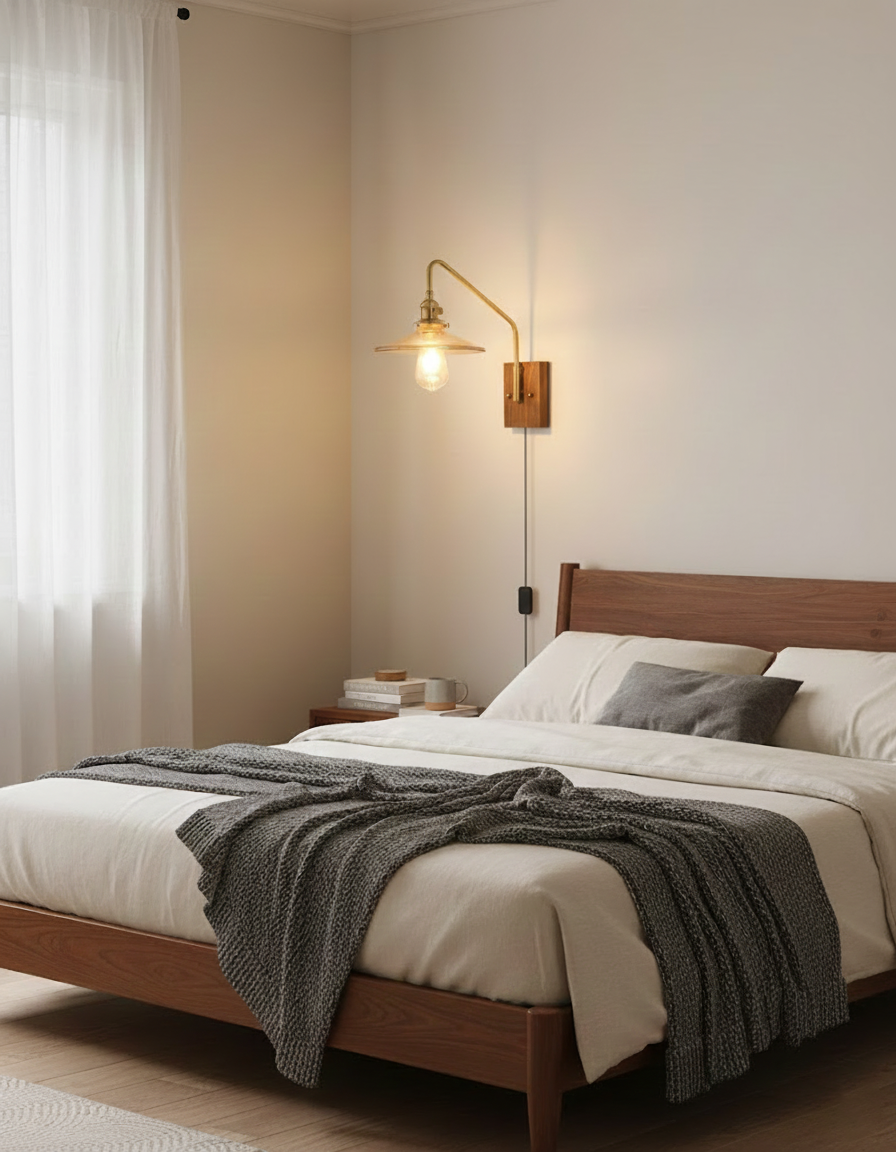
A pendant over a small table can make that corner feel like a dining area. A low lamp beside the sofa can turn one side of the room into a place to unwind. A wall light near the bed can make a sleeping area feel more settled, even if it is only a few steps from the living space.
The room does not need to be rebuilt. It needs a clearer rhythm.
Good small-apartment lighting does not have to be dramatic. It just has to be specific.
Think of light as a way to draw soft, invisible lines inside the room. A warm pool of light can mark a dining spot. A shaded lamp can anchor the sofa. A focused desk light can make work feel separate from the rest of the evening.

These boundaries do not block the space. They organize it.
That matters because small apartments often ask one room to do several jobs. Without lighting zones, everything feels like it is happening everywhere. With lighting zones, each area gets a purpose.
The change can be subtle, but it affects how the apartment feels in daily life. You feel it when you eat dinner without the whole room glaring above you, sit down with a book, or turn off the desk lamp and let work fade into the background.
Lighting helps the room shift with you.
When people think about defining a space, they often imagine strong contrast: brighter light, sharper shadows, obvious separation. But in a small apartment, hard divisions can make the room feel chopped up.
Soft boundaries usually work better.
A gentle side glow, a shaded table lamp, a wall light that washes across a surface, or a small pendant that creates a warm circle over a table can separate a zone without making the apartment feel smaller.
The goal is not to spotlight every corner. It is to bring light closer to the places where life actually happens: the sofa, the table, the bedside, the desk, the chair by the window.
That is why one carefully placed lamp can sometimes do more for the mood of a room than a brighter ceiling fixture. It creates a place to be, not just a room to see.
Not every corner needs its own light. In fact, lighting every part of a small apartment can make it feel busy. The better approach is to look at where your day naturally changes.
Start with the areas that do different jobs.
The Sofa Edge
The sofa is often the main living area in a small apartment, but it can easily disappear into the rest of the room. A lamp near one end of the sofa gives that area a center of gravity.
It can make the space feel more like a living room, even if the “living room” is only one side of an open layout.
The light does not need to be large. A compact table lamp, slim floor lamp, or softly shaded accent lamp can be enough. What matters is that the glow gathers attention around the seat you actually use.
That warm pool of light makes the sofa area feel ready for reading, watching a show, or relaxing without turning on the entire apartment.

The Dining Nook
Small dining areas often feel accidental. A round table near a window, a bistro table against a wall, or a small setup between the kitchen and living area can look temporary if nothing defines it.
Lighting changes that.
A pendant above the table, a plug-in pendant near the wall, or even a small lamp placed close to the dining surface gives the area a reason to exist. It makes even a simple meal feel more deliberate.
The table stops looking like extra furniture and starts feeling like its own moment.
This is one of the clearest examples of lighting as a boundary. The glow marks the table without needing walls, a rug, or a larger footprint.

The Bedside Wall
In a studio or small bedroom, the bed can dominate the space. The right bedside light can make the sleeping area feel calmer and more contained.
Instead of relying on one overhead fixture, a soft light near the bed creates a slower transition into the evening. A wall sconce, plug-in wall lamp, or small bedside lamp can help separate the bed from the rest of the apartment, especially when the room has to serve more than one purpose.
A bedside zone does not have to be symmetrical or formal. What matters is that the light supports the way the space is used at night.
It should feel quiet, close, and easy to reach.

The Desk Corner
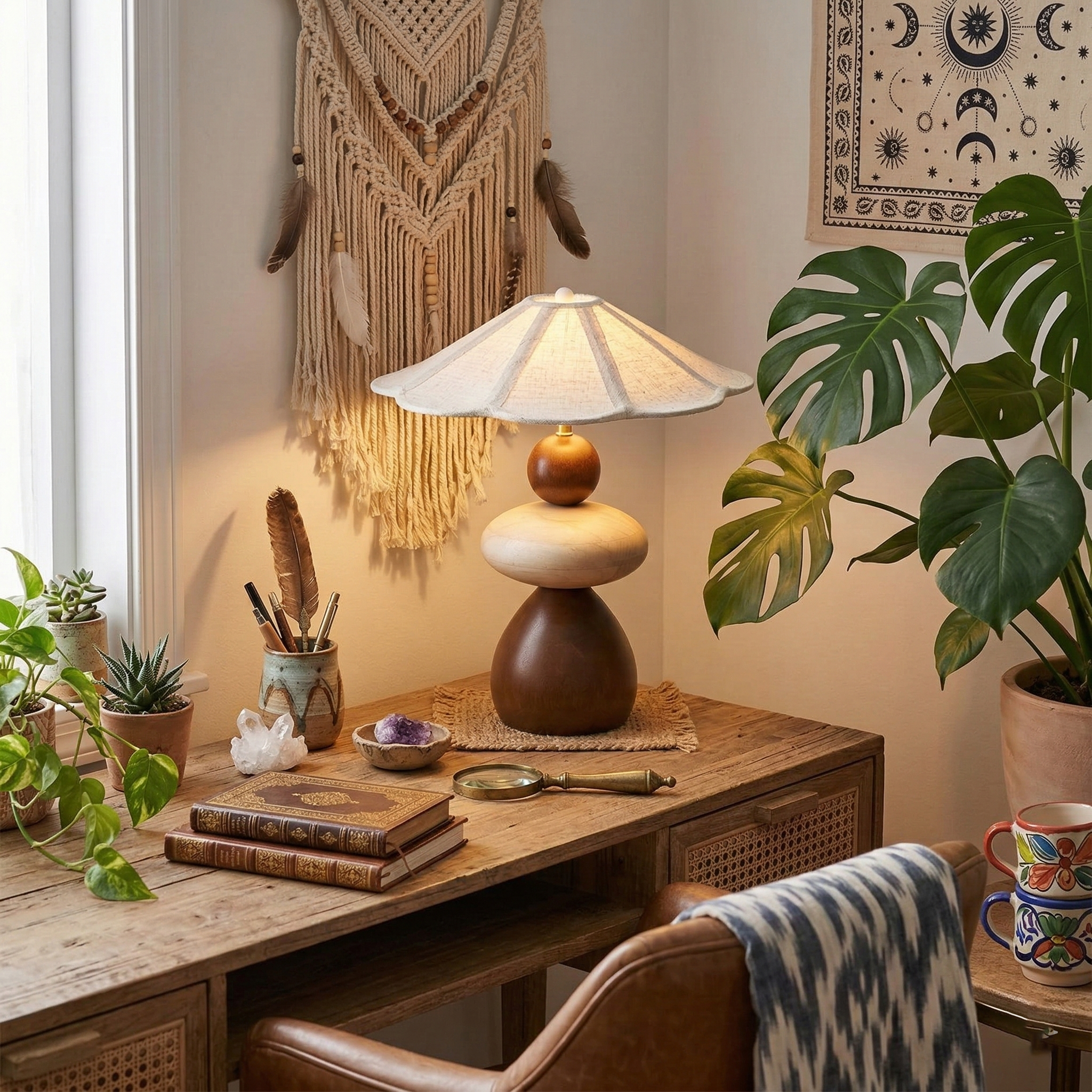
A desk in a small apartment often has to fight for identity. It may sit in the living room, beside the bed, or along a hallway wall. Without lighting, it can feel like a surface that never fully belongs.
A focused lamp gives the desk a clearer role.
It signals work time when it is on and lets the area recede when it is off. That shift is useful in any home, but especially in a small apartment where work and rest can blur too easily.
Good desk lighting should not make the whole room feel like an office. A small task lamp, adjustable table lamp, or focused side light can create enough clarity for work without taking over the apartment.
The desk needs focus, not glare.

Small-space lighting works best when every fixture has a purpose. Here are a few common mistakes that can make an apartment feel flatter, busier, or less comfortable.
| Mistake | Better Move |
|---|---|
| Relying on one overhead light | Add smaller lights for sofa, table, bedside, or desk |
| Adding lamps without a purpose | Give each light a clear job |
| Using bulbs that feel too cool | Choose warm white bulbs |
| Choosing the wrong scale | Pick visible but not bulky fixtures |
| Ignoring where the light lands | Think about the glow before the fixture |
The point is not to add more light everywhere. It is to make each light support a specific part of daily life.
It is easy to assume a small apartment needs more storage, more decor, more furniture, or brighter bulbs to feel finished. Sometimes it does. But often, the missing piece is simpler.
The room needs better boundaries.
Not hard boundaries. Not walls. Not a complete redesign.
Just enough light to give each part of the apartment a purpose.
Start with one corner: a sofa lamp, a dining pendant, a bedside wall light, or a focused desk lamp. One thoughtful light can change how a small apartment feels after sunset.
Brightness lets you see the room.
Boundaries help you live in it.

Some rooms are not missing furniture. They are missing expression.
Everything may already be in place — the bed, the side table, the chair in the corner, the console by the entry — and yet the room still feels a little too careful. A little too flat. A little too serious.
That is where the right table light can make a surprising difference.
A playful lamp does not have to make a room feel childish. In the right space, it can do the opposite. It can loosen the mood, soften the structure of the room, and give a corner a little more charm without making the whole space feel overdone.
The key is not choosing the loudest lamp. It is choosing one with enough shape, presence, or personality to wake the room up a little.

Usually, it comes down to shape more than color.
A lamp can feel playful because the silhouette is softer, the proportions are a little more sculptural, or the overall presence feels less predictable than a standard base-and-shade table lamp. That kind of playfulness feels very different from novelty. It adds expression, not gimmick.

Material matters too. When the form is paired with a finish or texture that still feels considered, the result tends to feel more at home in an adult space. Scale matters just as much. A lamp with enough visual presence reads like part of the room. One that feels too tiny can start to look more like decoration than design.
The best playful table lights usually do one thing very well: they bring a little lift to a space that has become too safe.
A bedside table is one of the easiest places to use a more playful lamp well. Bedrooms often lean so far into softness and neutrality that they start to lose their point of view. One light with a little more shape can fix that quickly.
Entry consoles are another good place. A more expressive table light can make the first few feet of a home feel warmer and more memorable.
Living room side tables and reading corners also respond well to this kind of lighting. These spaces do not always need more furniture or more accessories. Sometimes they just need one object that helps the corner feel finished.

The Miroku Table Light is the kind of piece that instantly turns a plain surface into something more memorable. Its mushroom silhouette, berry-red cap with soft polka dots, and small leaf detail give it a storybook feel, but the hand-applied, stone-like resin texture keeps it from feeling flimsy or novelty-driven. It has that rare cottagecore charm that still feels styled rather than costume-like. In a reading nook, on a bedside table, or in a softer guest room, Miroku brings a warm, ambient glow and a gentle sense of personality that makes the whole corner feel more imaginative.

Mello is the boldest lamp in the group, and that is exactly its appeal. The stacked geometric base, curved neck, and compact metal shade give it a playful Space Age profile that feels straight out of retro pop design. But what makes it especially good is that it is not just fun to look at — it is genuinely useful. The adjustable gooseneck and tri-color LED lighting make it practical for desks, late-night reading, or creative work, while the punchy color options give it real visual energy. If your room needs a lamp that feels upbeat, graphic, and a little unexpected, Mello does that better than most.

Cielora has a lighter, more decorative kind of charm. The crisp pleated shade keeps the silhouette neat and polished, while the pastel ceramic-and-metal base adds softness without feeling too sweet. What really gives it character, though, are the small hanging accents that make it feel more like a styled decorative object than a standard table lamp. Even when it is turned off, it still adds interest to the room. On a nightstand, a small console, or a living room side table, Cielora works beautifully when you want a lamp that feels playful, but still refined enough for a calm, well-finished space.

Tulira stands out because it feels like a flower translated into a cleaner, more modern design language. The softly curved green stem, rounded base, and petal-like shades surrounding the glowing center give it a fresh sculptural presence that feels cheerful without becoming too cute. It has more visual movement than a typical table lamp, which makes it especially good for corners that need a stronger focal point. Tulira is the kind of lamp that can soften a minimal room, brighten a console, or make a side table feel far more intentional just by being there.

Selmira is the most atmospheric piece in the lineup. Its wizard-hat silhouette already gives it a whimsical edge, but the real magic comes from the perforated star and dot details that cast a celestial projection when the lamp is on. That turns it from a simple table light into more of an experience. At the same time, the full resin construction and weightier feel give it substance, which helps it feel more elevated than overly childlike. In a reading corner, on a bedside table, or in a creative nook, Selmira brings a softer kind of drama — the kind that makes a space feel personal and a little dreamlike.

Heartelle is small, cheerful, and easy to love. The glossy pastel-blue mushroom shape is already playful, but the ring of pink and orange heart prints makes it feel even more lighthearted and graphic. What makes it especially appealing, though, is how easy it is to use. Because it is cordless and rechargeable, you are not locked into one spot, and the touch control with three color temperatures makes it feel casual and flexible in a way that suits everyday life. Heartelle works well on a nightstand, shelf, desk, or dorm setup — anywhere you want a lamp that adds a little joy without asking for much space.

The easiest way to make this kind of lighting work is to let the lamp do most of the expressive work.
If the light already has enough personality, the rest of the surface can stay simpler. A playful lamp usually looks better with fewer surrounding objects, not more. It also helps when the furniture around it is a little cleaner in line and shape. That contrast is what keeps the room feeling balanced.
A calmer palette helps too. The lamp does not need to match the whole room in energy. In fact, it often works better when it stands slightly apart from the rest of the space.
And finally, give it enough room to breathe. A good table light can change a corner on its own. It does not need a crowd.

A room does not have to be serious to feel well designed.
Sometimes the thing that makes a space feel more complete is not a larger piece of furniture or a full redesign. Sometimes it is one lamp with enough shape, charm, or personality to shift the mood of the whole corner.
That is what these table lights do best.
They make a room feel a little lighter, a little more expressive, and a little less predictable — while still feeling right at home in a grown-up space.
Explore more playful lighting at Docos and enjoy 10% off with code DCLIT.

Memorial Day weekend often arrives right when the patio starts to matter again.
The grill comes out. Dinner moves outside. Guests walk through the side gate instead of the front door. Chairs get pulled closer together as the evening cools down. And after sunset, the entire mood of the space depends less on the furniture and more on the light.
The good news is that getting your patio ready for the long weekend does not require a full outdoor redesign. You do not need to light every corner of the yard or turn the backyard into a showroom. A few thoughtful lighting choices can make the space feel warmer, easier to use, and more welcoming after dark.
The best place to start is with the areas people actually use: the entry, the path, the dining table, and the place where everyone lingers after dinner.
Before anyone reaches the patio table or backyard seating area, they experience the entrance.
That might be the front porch, a side door, a patio door, or a gate leading into the backyard. A soft light in this area immediately makes the home feel more prepared for evening guests. It also helps people move comfortably between indoor and outdoor spaces once the sun goes down.

For this zone, the light should feel steady but not harsh. A warm outdoor wall light beside a door can make the entrance feel finished without making it look overly bright. On a covered porch, a softer glow often feels more inviting than a strong overhead fixture.
This is especially helpful during Memorial Day weekend gatherings, when guests may arrive before sunset but leave after dark. The entry light becomes both practical and atmospheric. It gives people a clear place to arrive, return to, and move through during the evening.
A good rule: if people will carry plates, drinks, bags, or serving dishes through the space, the route should be gently lit.
Pathway lighting is one of the simplest ways to make an outdoor space feel more intentional.

It helps guide guests along walkways, garden paths, steps, driveways, and side yards. But beyond safety, it also gives the outdoor area a quiet sense of direction. A softly lit path makes the patio feel connected to the rest of the home instead of sitting in the dark as a separate area.
For a long weekend gathering, pathway lights can be useful around the places people naturally move: from the driveway to the front door, from the kitchen door to the patio, or from the dining area toward the backyard.
The key is not to overdo it. Pathway lighting usually looks best when it is low, evenly spaced, and subtle. You want enough light to guide movement, not so much that the path feels like a runway.
A little shadow is part of what makes outdoor lighting feel natural. Let the lights mark the way, while the garden and lawn stay calm in the background.
Outdoor dining needs a different kind of light than indoor dining.
Inside, a chandelier or pendant may define the table. Outside, the dining area might sit under a covered porch, beside a wall, on a deck, or in the open air. The lighting has to work with the setting rather than dominate it.
For Memorial Day weekend dinners, BBQs, or casual evening drinks, the goal is simple: people should be able to see their food and each other comfortably, without feeling like they are sitting under a spotlight.
Warm, low-glare light is usually the most flattering choice around an outdoor table. It makes glassware, wood, linens, grilled food, and faces look softer. It also helps the table feel like a place to stay, not just a place to eat quickly before moving inside.

On a covered patio, a ceiling fixture or pendant can help define the dining zone. On an open patio, a nearby wall light, lantern, or cordless table lamp can create a more flexible glow.
Try not to rely on one strong light placed directly overhead. A better effect usually comes from a few softer sources around the table: one light near the door, one on or near the table, and perhaps a low accent light nearby. The result feels more relaxed and more natural for summer evenings.
A comfortable patio is rarely lit by one fixture alone.
The spaces that feel best after sunset usually have light coming from more than one direction. There may be a wall light near the door, a soft lamp on a side table, low lights near the garden edge, and a gentle glow around the seating area.

This is layered lighting, and it works outdoors for the same reason it works indoors. It gives the space depth.
Instead of asking, “How bright should the patio be?” ask, “Where do people need light?” The answer is usually different in each area.
The dining table needs enough light for food and conversation. The seating area needs a softer glow. The pathway needs low guidance. The entry needs a steady welcome. The garden may only need a hint of light, or none at all.
This approach keeps the patio from feeling flat. It also lets the evening shift naturally. Early on, the sky still adds light. Later, the fixtures, lamps, and accents take over without making the space feel too bright.
For a seating area, side lighting often feels better than overhead lighting. A light near a chair, sofa, or outdoor side table can create the same kind of comfort people expect in a living room, but with the openness of the outdoors. That is what makes the patio feel less like an outdoor add-on and more like a summer room.
Outdoor gatherings tend to move.
Someone pulls a chair closer to the table. A conversation shifts to the porch steps. Drinks move from the dining area to the lounge chairs. Kids move between the patio and the yard. The best lighting setup gives the evening a little flexibility.
That is where portable lighting can be especially useful.
A cordless or rechargeable lamp can sit on a dining table during dinner, then move to a side table later in the evening. It can add a warm glow to a covered porch, balcony, console table, or garden ledge without requiring installation.
This is also one of the easiest last-minute updates before Memorial Day weekend. Instead of changing the whole patio, add one small source of warm light where people are most likely to gather.

Portable lights work especially well for renters, small patios, balconies, and covered porches where hardwired fixtures may not be an option. They also help soften areas that feel too dark but do not need a permanent light.
The effect should feel casual, not staged. Think of it as placing light where the evening naturally wants to happen.
A common mistake with outdoor lighting is trying to brighten everything.

But outdoor spaces usually feel more beautiful when some areas are allowed to stay quiet. A patio does not need the entire yard to be evenly lit. In fact, too much light can make the space feel less relaxing.
Choose a few moments to highlight instead. That might be the path from the gate, a planter near the seating area, a textured wall, or the edge of a garden bed. These small points of light help shape the space without taking away the softness of night.
For Memorial Day weekend, this balance matters. People gather where the light is warm, while the darker areas around the yard create depth and calm.
The most inviting outdoor spaces are not the brightest ones. They are the ones where light and shadow work together.
Outdoor lighting should look good, but it also has to make sense for where it will be placed.
A covered porch has different needs from an open patio wall. A garden path is different from a dining table. A light near a doorway may need to handle more daily use than a small accent lamp that only comes out for evening gatherings.
Before adding or replacing a fixture, think about exposure. Will the light sit under a roof? Will it be exposed to rain? Is it near a walkway, a seating area, or a dining table? Does it need to provide visibility, atmosphere, or both?
For exterior spaces, use lighting designed for outdoor use. Weather resistance, placement, and material all matter. The right fixture should support the way the space is used, not just match the furniture.
Style can still stay simple. A clean wall sconce can make an entry feel polished. Low pathway lights can make the yard feel more complete. A portable lamp can soften a table or seating corner. The best outdoor lighting does not compete with the space. It quietly helps it work better.

Memorial Day weekend is often the moment when outdoor living begins to feel real again.
The patio becomes a dining room. The porch becomes a place for late conversations. The backyard becomes part of the home’s evening rhythm. Lighting is what makes that shift feel natural.
With a few soft layers, your outdoor space can feel more welcoming without feeling overdone. A gentle entry light, a clear path, a warm table glow, and one comfortable seating corner can change the way the whole evening feels.
As summer begins, the goal is not to make the patio perfect. It is to make it easy to enjoy after sunset.
Ready to prepare your space for the season? [Explore our Outdoor Lighting Collection here] to find the perfect warm accents for your patio.

You've bought a beautiful chandelier, hung it over your round dining table—and something feels off. Too small, and the space looks bare. Too large, and the room feels cramped. Round tables have a concentrated focal point: the fixture becomes part of the table's silhouette, not just an accessory. This guide walks you through the 1/2–2/3 sizing rule, visual weight, hanging height, and shape harmony to ensure your light fixture complements your table perfectly. Whether you're shopping for a 36-inch breakfast nook or a 60-inch family table, you'll learn the exact diameter ranges, fixture types, and styling secrets that make a dining room feel cohesive and inviting in 2026.
A rectangular table spreads attention along its length, but a round table pulls every sightline toward its center—and directly up to whatever hangs above it. That geometry makes the fixture part of the table's composition: viewed from any seat, table and light read as one stacked silhouette. When the proportions are right, the pairing feels inevitable, like the room was designed around it. When they're wrong, nothing else can compensate—an oversized fixture presses down on the table and crowds diners' sightlines, while an undersized one leaves a visual hole that makes even a well-styled room feel unfinished. Because the relationship is so tight, small sizing decisions carry outsized consequences here, which is exactly why a simple formula helps.
The classic formula: your fixture's diameter should measure one-half to two-thirds of your table's diameter. A 48-inch table pairs well with a 24–32-inch fixture; a 36-inch bistro table wants roughly 18–24 inches of fixture. Where you land inside that range depends on three refinements. Room size: larger, open rooms tolerate the upper end; tight nooks favor the lower. Ceiling height: taller ceilings can carry fuller fixtures. Fixture design: airy, open designs can run larger than solid, heavy-looking ones without overwhelming the table. Treat the rule as your anchor, then adjust one notch either way—never more—for these factors.
| Table Diameter | Ideal Fixture Range | Fixture Type Examples | Styling Notes |
|---|---|---|---|
| 36" | 18–24" | Single pendant, compact drum | Breakfast nooks; keep it airy |
| 42" | 21–28" | Pendant, small chandelier | Small dining rooms; watch visual weight |
| 48" | 24–32" | Chandelier, orb, drum pendant | The most common pairing; center precisely |
| 54" | 27–36" | Multi-arm chandelier, tiered pendant | Room for fuller, more formal designs |
| 60"+ | 30–40" | Statement chandelier, radiating designs | Family tables; upper range suits high ceilings |
All three work over round tables—the choice is about formality and ceiling height. Multi-arm chandeliers from our Chandelier collection deliver the fullest, most formal look and suit 54-inch-plus tables in rooms with vertical space. Single pendants read modern and organic; their round shades naturally echo the table's curve, making them ideal for casual spaces and nooks. Semi-flush fixtures are the answer for standard 8-foot ceilings—a true centerpiece that keeps the room open and airy without hanging into sightlines. One caution: skip linear and island-style pendants here. Their long horizontal geometry clashes with a circular table; stick to round, drum, orb, or radiating silhouettes that repeat the table's form. Browse the Dining Room collection to compare all three shapes in one place.
Two fixtures with identical diameters can feel completely different. Visual weight is how heavy a fixture appears: a 30-inch solid-metal chandelier reads massive, while a 30-inch glass globe of the same width feels nearly weightless. In small dining rooms this is the difference between cozy and claustrophobic. If your room is tight but your table calls for a larger diameter, resolve the tension with open frames and transparent materials—Glass lighting keeps the correct proportions without the bulk, and airy Murano glass chandeliers add artistry and color while staying light on the eye. Save solid metals and dense shades for generous rooms that can absorb their presence.
Hang the bottom of the fixture 30–36 inches above the tabletop. That window puts light low enough to create an intimate pool over the table while keeping sightlines clear across it—you should see your dinner guests, not your fixture's underside. For ceilings above 9 feet, add roughly 3 inches per additional foot of ceiling height so the fixture stays visually connected to the table rather than floating in the room. Measure from the tabletop, not the floor, and check the height while seated: that's the view that matters at dinner.
1. Going too small. The most common error—an undersized fixture makes the whole room look unfinished. When torn between two sizes, err larger, especially with airy designs. 2. Ignoring visual weight. A heavy solid fixture in a tiny nook overwhelms even at the "correct" diameter; match material to room size, not just table size. 3. Hanging too high. A fixture lifted out of the 30–36-inch window loses its connection to the table, producing harsh general glare instead of an intimate dining glow.
Measure your table, apply the 1/2–2/3 rule, and check your ceiling height—that's 90% of the decision made. For the final 10%, explore our Dining Room collection of proportioned chandeliers and pendants, and find the piece that completes your table's silhouette.
The rule suggests your fixture's diameter should be half to two-thirds the width of your round table. For example, a 48-inch table pairs well with a 24–32-inch fixture. This is a starting guideline; adjust for room size, ceiling height, and fixture design.
The bottom of the fixture should typically hang 30–36 inches above the tabletop. For ceilings higher than 9 feet, add roughly 3 inches for each additional foot of ceiling height to maintain visual connection with the table.
It's not recommended. Linear fixtures create a geometric clash with the round shape, disrupting visual harmony. Stick to round, drum, orb, or radiating silhouettes that echo the table's circular form.
Visual weight refers to how heavy a fixture appears, regardless of its actual size. A 30-inch solid-metal chandelier feels heavier than a 30-inch glass globe. In small rooms, choose fixtures with open frames or transparent materials to avoid overwhelming the space.
Semi-flush mount fixtures are ideal for standard 8-foot ceilings. They provide a beautiful centerpiece while keeping the room feeling open and airy, without hanging too low into the space.

In our last moodboard, we talked about visual lightness—not empty rooms, but rooms that feel breathable, open, and easy to live in. We also talked about why woven lighting plays such a big role in that feeling: by day, it adds organic texture without heaviness, and at night, the open weave lets light slip through in a softer, more natural way. This is where that idea becomes practical. If you want to bring that lighter, airier mood home, these are the woven lights we would start with.
If you want the room to feel lighter right away, a pendant is the fastest way to do it. It changes the center of the room without asking you to redo everything around it.
The Cazira Pendant Light is the most design-forward of the group. Its layered woven forms open out like drifting petals, and the overall silhouette feels airy rather than solid. It is a good choice when you want a dining area or breakfast nook to feel softer and more sculptural, but not visually heavy.
 The Wovelle Pendant Light is simpler and easier to place. Its woven drum shape still brings texture and warmth, but in a quieter, more everyday way. If Cazira feels like a statement, Wovelle feels like the kind of woven pendant that can slide naturally into a lot of homes.

The Ravela Rattan Pendant Light sits somewhere in between. Its handwoven rattan body and wave-edged scalloped rim give it more character than a standard dome, but it still keeps that breezy, open quality that makes woven lighting feel so good in summer.

One of the easiest mistakes people make with “airy” interiors is putting all the softness at the center of the room and leaving the edges too plain. Wall lights help fix that.
The Vera Rattan Wall Lamp is the more refined option. Its gently flared handwoven shade feels organic, but still clean and composed, which makes it especially good for bedrooms, hallways, or any room that already has a modern base and just needs a little warmth at eye level.

The Calora Wall Sconce is softer and more obviously romantic. Its six-petal scalloped shape, handwoven natural rattan, and warm downward glow make it especially appealing beside a bed. It is the kind of light that can replace a nightstand lamp and make the bedside feel calmer and less cluttered at the same time. That is exactly the kind of move that makes a room feel lighter without actually removing personality from it.

Not every room needs a new overhead light. Sometimes one well-placed woven table lamp does enough.
The Lunora Table Light is especially good if you liked the “weight and air” idea from the moodboard. The finely woven tapered shade feels open and light, while the sculpted solid pine base gives it grounding. That contrast is what makes it interesting. It brings texture and softness, but still feels stable and intentional on a side table or console.

The Baskora Table Light is more relaxed. Its woven body and matching shade feel warmer and more casual, with a profile that leans coastal and softly bohemian. If Lunora is the more balanced, edited choice, Baskora is the one that makes a corner feel instantly more laid-back.

Sometimes the room wants woven texture, but the ceiling height says no. That is where a piece like the Calyra Ceiling Light makes sense.
It keeps the same natural material story going, but in a lower-profile form. The handwoven dark rattan shade, soft scalloped curves, and opal glass globe give it warmth and texture without dropping too far into the room. It is a smart option for hallways, bedrooms, or smaller spaces where a pendant would feel in the way but a standard flush mount would feel too plain.

If you want a true focal point, start with Cazira, Wovelle, or Ravela. If you want to bring that same summer lightness to the edges of the room, Vera and Calora are the best bridge between function and atmosphere. If your goal is smaller and more everyday—a console, a bedside, a side table—Lunora and Baskora make the biggest impact with the least effort. And if you love the woven look but your ceilings are working against you, Calyra is the easiest way to keep the feeling without forcing the wrong fixture type.
Visual lightness is not about making a room feel empty. It is about helping it feel breathable, open, and easy to live in. Woven lighting does that especially well because it adds warmth, texture, and shape without making a space feel heavy.
Whether you are looking for a pendant that can soften the center of the room, a wall lamp that brings warmth to the edges, or a table light that makes a corner feel calmer, these are the kinds of pieces that can bring that summer feeling home in a way that still feels natural year-round.
Explore more woven lighting at Docos and enjoy 10% off with code DCLIT.


As May unfolds and the days begin to stretch a little longer, the sun lingers in the evenings, the windows stay open, and the air feels distinctly different. Naturally, we transition our wardrobes—swapping heavy wool coats for breezy linen button-downs. We change our bedding from thick flannels to crisp, cool cottons.
But what about the rest of our home?
One of the best-kept secrets in interior design is treating your home decor like a seasonal wardrobe. You don't need a full renovation to shift the mood of a room. Instead, the arrival of summer is the perfect time to introduce the defining design concept for Summer 2026: Visual Lightness.
Here is what visual lightness means, why top designers are obsessing over it, and how you can use lighting to give your home a deep, refreshing summer breath.

Visual lightness is not about minimalism. It doesn’t mean emptying your room, painting everything stark white, or getting rid of your beautiful, substantial furniture.
Instead, it’s about breathability. It’s the art of introducing elements that allow light to pass through them, or materials that evoke the effortless, organic feeling of the natural world. Think of it as adding a fresh vase of wild summer branches to a heavy, antique oak dining table. The contrast is what makes the room feel alive, curated, and perfectly balanced.
If you want to transition your home for the warmer months, changing a few key light fixtures is the most impactful way to bring this airy aesthetic indoors. Here are the three quintessential "textures of summer" we are loving this season:
1. Natural Woven & Rattan (The Coastal Retreat)
There is a reason woven lighting is the cornerstone of the "Quiet Coastal" trend. Fixtures crafted from natural rattan, bamboo, or woven grasses bring the relaxed energy of a seaside villa right into your dining room or kitchen.

2. Soft Linens & Pleated Fabrics (The Gentle Diffuser)
Summer sunlight can sometimes feel harsh and unforgiving. Introducing fabric lighting is the ultimate antidote.

3. Seeded & Clear Art Glass (The Illusion of Water)
Glass is the ultimate material for visual lightness because it is inherently transparent. It takes up physical space without taking up visual weight, keeping your sightlines open and airy.

Now, here is the most important rule of the seasonal home wardrobe: You need contrast. Visual lightness only works if there is something substantial to ground it. If your entire room is made of pale woods, white linens, and airy textures, the space can feel flimsy—like it might just float away.
The most breathtaking, magazine-worthy spaces master the mix of "weight" and "air."

Your home is a living space; it should evolve with the seasons and respond to the light outside. Take a moment to look around your living room, your dining area, or your bedroom. Ask yourself: Where could this room use a gentle summer breeze? Sometimes, all it takes is one perfectly chosen, breathable fixture to transform the entire atmosphere of your home.
[Explore the Docos Collections] and discover the perfect texture to refresh your space for the beautiful summer ahead.


When your bedroom is short on space, every inch matters. A bulky table lamp can eat up a tiny nightstand fast, leaving little room for a book, a glass of water, or your phone charger. That is why bedside wall lamps are such a smart choice for small bedrooms. They free up surface space and help the bedside area feel cleaner, calmer, and more intentional.
The best bedside wall lamps for small bedrooms do more than save space. They can also make the room feel warmer, softer, and easier to use at night. The key is choosing a style that fits the way you actually live.

Not every wall lamp works well beside a bed. In a small bedroom, the best options usually have a few things in common:
Before thinking about how the lamp is installed, think about what you need it to do.
Swing-Arm Wall Lamps If you like to read in bed, this is one of the best options. A swing-arm wall lamp gives you ultimate flexibility. You can pull the light closer to your book when you need it, then push it flat against the wall when you want a cleaner look during the day. It adds massive function without taking up extra real estate.

Soft-Glow Wall Lamps If you want the bedroom to feel calmer at night, a soft-glow wall lamp is a beautiful option. A shaded or frosted glass fixture feels gentler than an exposed bulb, helping the bedside area feel warmer and more relaxed. This style works exceptionally well in small bedrooms because it softens the room instead of making it feel clinical.
Once you know the style you want, decide how much installation work you are willing to do.
Plug-In Wall Lamps Plug-in wall lamps are a brilliant choice when you want the elevated look of wall lighting without taking on a major electrical project. They are especially helpful for renters, or for guest rooms that need a quick weekend upgrade. You get all the space-saving benefits of mounted lighting with zero damage and zero commitment.
Hardwired Wall Sconces If you own your home and want the bed wall to feel seamlessly built-in, hardwired wall sconces are worth the effort. Because all the wiring is concealed behind the drywall, the overall look is incredibly clean and refined. Without visible cords, a small bedroom instantly feels less cluttered and more architecturally intentional.

Placement matters just as much as the fixture itself. Even the most stunning wall lamp will feel awkward if it is mounted too high, too low, or too far from the bed.

If the bed is centered on the wall, matching lamps on both sides create the most balanced, hotel-like look. However, in a very tight room, even one well-placed wall lamp on a single nightstand can make a noticeable difference.

Making a small bedroom feel more spacious and stylish does not have to mean starting from scratch or doing a major renovation. A simple switch from a bulky table lamp to a bedside wall lamp can instantly free up valuable surface space and make the room feel cleaner, calmer, and much more complete.
At Docos, we offer lighting options for every kind of bedroom setup. Whether you need a renter-friendly [Plug-In Wall Lamp] or a highly refined [Hardwired Wall Sconce] for a permanent upgrade, you can find a piece that beautifully fits the way you live.
Ready to reclaim your nightstand? Browse the full [Docos Wall Lamp Collection] and use code DCLIT for 10% off your entire order at checkout!

Most rooms do not need a complete makeover. Sometimes, they just need better lighting. A soft glow on a nightstand, a pretty sconce beside a mirror, or a small floral lamp in a quiet reading corner can completely change the way a space feels at the end of the day.
Floral and botanical lighting brings warmth, softness, and personality into the home without feeling too formal. But how do you choose between a table lamp and a wall sconce? Both work beautifully, but they serve different purposes. Let’s take a closer look at how to choose the perfect nature-inspired light for your bedroom, bathroom, hallway, or favorite cozy corner.
Floral lighting works best in the places where a room needs a little warmth — beside the bed, along a hallway, near a vanity, or in a quiet reading corner.
These are often the small spaces people notice every day, but do not always know how to style. A floral lamp adds shape, softness, and a gentle glow without needing a full room makeover.
With curved stems, petal-like shades, and nature-inspired details, it can make a simple corner feel more thoughtful and inviting. The room still feels easy to live in, just with a little more charm and personality.
If you want a quick update with no installation, a table lamp is the easiest place to start. You can place it on a nightstand, side table, dresser, console, or vanity and instantly change the mood of the room.
Rosalie Table Lamp: A Playful Clip-On Lamp for Flexible Styling

The Rosalie Table Lamp is a charming choice for anyone who wants lighting that feels playful, soft, and a little unexpected. Its curved stem and ruffled flower shade make it look like a blooming flower leaning gently into the room.
What makes Rosalie especially useful is its clip-on base. Instead of staying in one fixed spot like a traditional table lamp, it can be clipped to a bedside headboard, desk edge, shelf, vanity table, or reading nook. That makes it easy to move around and style wherever a soft glow is needed.

It is a beautiful option for bedrooms, girls’ rooms, vanities, dorm rooms, and cozy corners. The floral shape adds personality, while the clip design makes it practical for everyday use.
Choose Rosalie if you want a lamp that feels decorative, flexible, and easy to place — not just pretty to look at.
Roselith Table Lamp: Romantic Bedside Lighting with Everyday Function

The Roselith Table Lamp has a more romantic and vintage-inspired feel. With rose details, textured leaves, twisting stems, and a soft frosted shade, it creates the feeling of a quiet garden moment indoors.
This is a strong choice for a bedside table because it offers both beauty and function. The built-in USB Type-C port makes it easy to charge a phone or device nearby, which is a thoughtful detail for everyday use.
Roselith is ideal for customers who want a bedroom lamp that feels decorative, feminine, and practical at the same time. It gives the room a gentle glow while adding a romantic focal point to the nightstand.
Selora Table Lamp: A More Refined Botanical Look

Not every floral-inspired lamp needs to feel sweet or colorful. The Selora Table Lamp is a great option for customers who prefer a more natural, grounded look.
Its branch-like form, warm wood tone, leaf details, and bud-shaped shades create a calm organic feeling. It works beautifully with neutral bedding, wood furniture, linen textures, and warm modern interiors.
Selora is a good choice for bedrooms, living rooms, or side tables where you want something sculptural but not overly decorative. It feels nature-inspired, but still mature and easy to style.
Choose Selora if your home leans warm, modern, earthy, or softly minimalist.
Choose a Wall Sconce When the Wall Needs Something Special
Wall sconces are perfect when you want to add light without taking up table space. They are also a great way to make a room feel more finished.
A floral wall sconce can work beside a bed, above a nightstand, near a bathroom mirror, in a hallway, or in a powder room. It brings light to eye level, which makes the room feel warmer and more layered.
If a wall feels empty but artwork does not feel quite right, a botanical sconce can be a beautiful solution.
Florisse Wall Lamp: Sweet, Botanical, and Easy to Love

The Florisse Wall Lamp has a delicate lily-of-the-valley look, with green leaf details and white bell-shaped shades. It feels fresh, charming, and slightly whimsical without being too bold.
One of the biggest reasons to recommend Florisse is its convenience. Because it does not require hardwiring, it is a great option for renters, apartments, bedrooms, bathrooms, and small spaces where customers may not want a complicated installation.
It is perfect for anyone who wants a floral wall light that feels decorative, approachable, and easy to place.
Virella Wall Sconce: Elegant Floral Lighting for Bathrooms and Bedrooms

The Virella Wall Sconce has a more polished and graceful look. Its floral shades, slim stems, and warm metallic details make it feel like a small bouquet arranged on the wall.
This piece works especially well beside a bathroom mirror, above a vanity, in a hallway, or on either side of a bed. It adds a refined floral touch without feeling too playful.
Virella is a good recommendation for customers who want floral lighting that feels elegant, balanced, and timeless. It has enough detail to be eye-catching, but it is still easy to pair with classic, vintage, or transitional interiors.
Bellmira Wall Sconce: A Statement Piece with Soft Floral Shape

The Bellmira Wall Sconce is the most sculptural option in this group. With multiple floral shades and graceful curved stems, it creates more visual impact than a smaller wall light.
This is the piece to choose when you want the fixture itself to become part of the room’s decor. It can bring softness to a hallway, create a romantic moment in a bedroom, or add charm to a powder room or dining corner.
Bellmira is ideal for customers who want lighting that feels decorative and memorable. It is not just there to brighten the wall — it helps define the space.
What makes floral lighting so special is that it does not need to be loud to make an impact. A soft petal shade beside the bed, a leafy sconce near the mirror, or a blooming silhouette on the wall can quietly change how a room feels.
These pieces bring warmth, shape, and a little romance into everyday spaces. They make the home feel more collected, more personal, and less predictable.
Whether you choose a playful table lamp, a romantic bedside light, or a sculptural wall sconce, the right floral lamp can turn an ordinary corner into something worth noticing.
Bring home your favorite floral light today and enjoy 10% off with code DCLIT.


While many glass fixtures rely on a single, continuous mold, the Azurielle collection takes a more deliberate, structural approach. The shade is not formed from one smooth piece of glass; it is built piece by piece from individual textured panels, meticulously arranged into a tapered silhouette and bound by clean metal lines.
If our Fun Guy edit explored mosaic glass as a surface—using small glass tiles to create a pixel-like texture and a graphic grid—Azurielle is about a completely different kind of glasswork. Here, the focus shifts to larger architectural panels, clean vertical seams, and the meticulous way separate pieces unite to form a single, striking shade.

The Difference Starts With the Panels
The Azurielle process begins with the glass itself. This panel-by-panel construction is most noticeable in the blue version, where different blue-toned pieces are placed side by side. Some panels appear deeply saturated, while others look more translucent, creating a dynamic interplay as light moves across the textured surface.
The amber and clear versions use the exact same construction, but the visual contrast is more subtle. Amber stays within a warmer, vintage-inspired tonal range, while the clear glass depends entirely on its rippled texture, the metallic seams, and its geometric shape to catch the eye.

Precision Cutting and the Copper Foil Method Because Azurielle features a tapered profile, none of these panels are simple rectangles. Each piece must be precision-cut at specific angles. If a single cut is slightly off, the vertical lines will look uneven, and the shade will lose its balance.
But cutting is only the first step. Fresh-cut glass can be sharp and raw. Before joining, the edges are carefully refined and wrapped in ultra-thin copper foil. This traditional technique is the secret behind the seams—because solder cannot stick directly to bare glass, the copper foil acts as the crucial gripping point that makes the metallic grid possible.

Soldering on a 3D Form You cannot build a tapered shape flat on a table. To ensure perfect symmetry, the foiled glass panels are carefully arranged onto a custom 3-dimensional mold.
Once perfectly aligned, the soldering work begins. The artisan applies the solder along the foiled lines where the panels meet. The heated metal alloy binds the glass tightly together, creating the raised, structured seams that define Azurielle’s geometric shape. This is the exact moment when separate, fragile pieces of glass become one solid, durable fixture.

Refining the Final Finish After the shade is assembled, the seams are meticulously cleaned and finished. The goal here is never to hide the seams—they are an intentional, vital part of the design that shows exactly how the lamp was made. Instead, they are smoothed and treated to ensure they look crisp, deliberate, and controlled, providing a strong structural contrast against the textured glass without looking messy.

A Glow Built Piece by Piece
All of this meticulous cutting, foiling, and soldering isn't just an exercise in craftsmanship. The true reward of this piece-by-piece construction is revealed the moment you flip the switch.
Instead of the flat, predictable illumination of a standard molded cover, the Azurielle shade casts a warm, layered, and deeply textured glow across your room—a beautiful reminder of the hands that built it.

See the Azurielle Collection Up Close: Explore the [Azurielle Wall Sconce]and [Azurielle Pendant Light]to see how this panel-built glass shade can bring a more detailed, crafted finish to your home lighting.

In our recent post, How Statement Lighting Creates Mood, Texture, and Focus, we explored how the right fixture can act as the crown jewel of a room. We also highlighted resin lighting for its remarkable ability to mimic natural materials, diffuse light softly, and add sculptural texture to a space.
But once you've installed that perfect resin pendant, wall sconce, or table lamp, a new question naturally comes up: how do you keep it looking as beautiful as the day you unboxed it?
Resin is durable, versatile, and full of design possibilities, which is why it has become a favorite material for modern decorative lighting. Still, like any statement piece, it needs the right kind of care to maintain its luminous finish, rich color, and smooth surface over time. This resin lighting care guide will walk you through simple cleaning tips, common mistakes to avoid, and easy maintenance habits that help your fixtures stay bright, clean, and beautiful for years.
Resin lighting is loved for its soft glow, sculptural appearance, and rich surface texture. Unlike plain metal or glass fixtures, resin can create a warmer, more artistic look, making the light feel decorative even when it is turned off.
This is also why resin fixtures deserve gentle care. Their beauty often comes from the surface finish, color depth, and subtle texture of the material. Harsh cleaners, rough sponges, excessive heat, or long-term direct sunlight may affect the surface over time, making it look dull, cloudy, scratched, or less vibrant.

The key is simple: resin does not need aggressive cleaning. It needs soft tools, mild products, and regular light maintenance. With the right care, your resin lighting can keep its smooth finish, gentle glow, and sculptural charm for years.
Before cleaning any resin light fixture, always turn it off and let the bulb cool completely. This is especially important for pendant lights, chandeliers, ceiling lights, and wall sconces.
Avoid spraying water or cleaner directly onto the fixture. Moisture should never enter sockets, cords, seams, switches, or metal hardware. For hardwired fixtures or large chandeliers, switch off the power before deeper cleaning.
Prepare a few simple tools:
You do not need strong chemical cleaners. In fact, the gentler the better.

For everyday care, dusting is usually enough.
Dust can soften the glow of a resin lamp and make the surface look less fresh. This is especially noticeable on glossy, translucent, light-colored, or sculptural resin fixtures.
Use a dry microfiber cloth to gently wipe smooth surfaces. For carved details, petal shapes, grooves, or textured areas, use a soft brush to remove dust from corners.
A simple dusting routine every one or two weeks can help your resin lighting stay clean without the need for frequent deep cleaning.
For resin pendant lights, dust the upper surface and edges. For wall sconces, wipe away fingerprints and surface dust. For table lamps, clean the base and any areas that are often touched.

When your resin lamp has fingerprints, light stains, or buildup, use a gentle cleaning method. Five simple steps cover everything from initial dusting to final drying.

Start with a dry microfiber cloth or soft brush. Removing dust before using water prevents it from spreading across the surface.
Mix a few drops of mild dish soap with warm water. Avoid strong cleaners, glass sprays, bleach, alcohol, ammonia, or acetone.
Dip a microfiber cloth into the soapy water, then wring it out well — the cloth should be damp, not wet. Gently wipe the resin surface. Do not scrub or press too hard, especially around decorative details.
For grooves, seams, or sculptural shapes, use a cotton swab or soft brush. This works well for resin flower pendants, textured sconces, or artistic table lamps.
Use a clean dry cloth to remove any remaining moisture. Let the fixture air dry fully before turning the light back on.

The biggest mistake is treating resin like glass, metal, or ceramic. Resin has its own surface finish, and harsh cleaning products can damage it. Avoid using:
Also avoid soaking resin parts or spraying cleaner directly onto the fixture. Always apply water or cleaner to the cloth first, then wipe the surface gently.
Resin fixtures may need slightly different care depending on where they are placed. Each format catches dust and wear in its own way — here is a quick reference for the three most common types.
Dust tends to collect on the top surface, edges, and layered details. Use a soft microfiber cloth or an extendable duster, and always avoid pulling or twisting the shade while cleaning.
Fingerprints and surface dust are more common because they sit closer to eye level and hand contact. A dry microfiber cloth is usually enough; a slightly damp cloth handles small smudges.
Pay extra attention to the base and frequently touched areas. Keep perfume, alcohol sprays, essential oils, and harsh cleaning products away from the resin surface — they may leave marks or affect the finish.
Good resin lighting care is not only about cleaning — placement and habits matter just as much. Three small principles help preserve the color and finish of your fixture for years.
Keep resin fixtures away from long periods of direct sunlight, excessive heat, and harsh household sprays — these are the main causes of fading and yellowing over time.
Always match the recommended bulb type and wattage. Excess heat from oversized or wrong-spec bulbs can affect surrounding resin and shorten the life of the finish.
Clean fingerprints early and avoid scraping the surface with sharp or rough objects. Small daily habits help your resin lighting hold its smooth finish and soft glow for years.
For a quick refresher, here are the key do's and don'ts for keeping resin lighting clean, safe, and beautiful over time.
Caring for resin lighting is simpler than it seems. With regular dusting, gentle wiping, and the right tools, your pendant, sconce, table lamp, or chandelier will keep its soft glow, smooth finish, and sculptural beauty for years. Avoid harsh cleaners, excessive heat, and rough materials, and your fixture will stay clean, bright, and beautiful well beyond the day you unboxed it.
Ready to bring more texture, warmth, and character into your home? Explore our resin lighting collection below and enjoy 10% off with code DCLIT.

Most people choose lighting by style.
Modern. Vintage. Coastal. Classic. Minimalist. Traditional.
Those labels can be helpful, but they do not always explain why one room feels warm and finished while another feels flat. The most memorable interiors are rarely built around style alone. They are shaped by atmosphere — the softness of the glow, the texture on the wall, the way a chandelier anchors the eye when you enter the room.
That is where statement lighting changes everything.
A sculptural pendant can make a small powder room feel intimate and intentional. A wall sconce can turn a blank hallway into a quiet architectural moment. A chandelier can give a dining room, foyer, or open living space the sense of presence it was missing.
Instead of asking only, “What style is this light?” it may be more useful to ask:
What mood should this room have?
Where does the space need texture?
What should become the focal point?
Here is how to use lighting to create all three.

Mood is the first thing people feel when they walk into a room, even before they notice the furniture. A soft glow can make a space feel warmer, calmer, more romantic, or more refined.
This is especially important in smaller spaces — powder rooms, vanity corners, reading nooks, bedside areas, and walk-in closets. These rooms do not always need a large centerpiece. They need one beautiful detail that makes the space feel personal.
The Magnelle Pendant Light is made for that kind of moment.
With its petal-like shade and softly glowing glass globe, Magnelle feels delicate without being overly sweet. The floral shape brings a romantic softness, while the warm metallic detail adds just enough polish to make it feel refined. It has the presence of a decorative object, but its scale keeps it graceful in smaller rooms.

Hang it above a compact vanity, beside a reading chair, in a nursery corner, or over a small breakfast nook. It brings charm to spaces that are often overlooked, creating a gentle glow that feels calm, warm, and intentionally styled.

For a more organic mood, the Mariselle Wall Sconce offers a different kind of softness.
Inspired by the shape of a seashell, Mariselle has sculpted ridges that catch light beautifully. Instead of shining directly outward, it creates a warm halo against the wall, giving the room a quiet, layered atmosphere. It feels less like a standard wall lamp and more like a piece of wall decor that happens to glow.
Its finish options also change the mood. White feels soft and elegant. Black makes it more dramatic and architectural. Gold adds warmth and richness. Wood grain brings in a natural, earthy tone.

Use Mariselle beside a bathroom mirror, along a hallway, above a nightstand, or on a covered porch wall. It works especially well in places where you want the lighting to feel calm, flattering, and atmospheric rather than harsh or direct.

The goal is not simply to make the room brighter.
The goal is to make the room feel better.
Some rooms do not feel unfinished because they lack furniture. They feel unfinished because the walls are too plain.
This is where sculptural wall sconces become powerful. They add dimension at eye level, which ceiling lights and table lamps cannot always do. A good wall sconce creates shadow, rhythm, and surface interest. It makes a blank wall feel designed.
The Fanoria Wall Sconce brings texture in a clean, architectural way.
Its stacked cone silhouette feels sculptural and modern, almost like a small architectural column on the wall. The white textured surface keeps it quiet, while the upward glow adds softness and depth. It does not try to be overly decorative. Instead, it creates interest through proportion, shadow, and shape.

Fanoria is especially strong in places with vertical space: a stair landing, a tall hallway, a fireplace wall, or a modern powder room. It draws the eye upward and makes the wall feel taller, more intentional, and more complete.

For a more decorative interpretation of texture, the Celandra Wall Sconce brings in a softer, more classical presence.
With its botanical relief and candle-style arms, Celandra has an old-world elegance that feels romantic without becoming heavy. The leafy form adds detail to the wall, while the warm metal accents give it a refined finish. It is the kind of sconce that can make a bathroom, entryway, or bedroom feel layered and quietly luxurious.

Use Celandra beside a vanity mirror, above an entry console, in a hallway, or in a bedroom where you want a vintage-inspired detail. It works especially well with curved mirrors, marble surfaces, antique brass finishes, soft neutral walls, or traditional moldings.

Texture does not always mean adding another material to the room.
Sometimes, it means letting light reveal shape.
Every room needs a visual anchor. In a dining room, it is often the chandelier. In a foyer, it may be the first fixture guests see. In an open living space, it can define the room before the furniture does.
A statement chandelier gives the eye somewhere to land.
The Lvoria Chandelier is ideal for spaces that need structure, symmetry, and a sense of gathering.
Its candle-style silhouette feels familiar and timeless, but the clean black or white finish gives it a modern edge. The curved arms bring movement, while the central column adds just enough detail to keep the design from feeling flat. It has a classic foundation, but it does not feel old-fashioned.

In black, Lvoria creates contrast and drama. It works beautifully over a dining table, especially in rooms with dark accents, wood furniture, or traditional details. In white, it feels lighter and softer, making it a good choice for bright dining rooms, breakfast nooks, or relaxed living spaces.

This is the kind of chandelier that makes a room feel gathered. It brings people toward the center, visually and emotionally.
For a more artistic focal point, the Swanelle Chandelier takes a different approach.
Swanelle does not rely on crystals, ornament, or excess. Its beauty comes from shape and balance: a suspended ring, a tapering central form, and a softly glowing globe. The composition feels sculptural, almost gallery-like, with enough open space to keep the fixture from feeling heavy.
This makes Swanelle especially well suited to larger rooms that need presence without visual clutter. A double-height entry, open living room, stairwell, or vaulted bedroom can all benefit from its scale and quiet drama.

Where Lvoria feels classic and composed, Swanelle feels artistic and unexpected. It becomes the piece that people notice first — not because it is loud, but because it gives the room a point of view.
A chandelier should not simply hang in the room.
It should explain the room.
When styling more than one room, the goal is not to make every light fixture match. A more natural approach is to let each piece carry the mood of its own space while still feeling connected to the rest of the home.
For a softer look, pair the Magnelle Pendant Light with the Celandra Wall Sconce in bedrooms, powder rooms, or vanity areas. Both pieces bring a romantic quality, but in different ways — one through floral softness, the other through classical detail.
For a more organic and architectural feel, combine Mariselle with Fanoria. Mariselle adds warmth and movement, while Fanoria brings height and structure, making the pairing especially strong for bathrooms, hallways, stairwells, and entry spaces.
For larger rooms, let the chandelier lead. Lvoria works beautifully when you want a dining room or living space to feel classic and gathered, while Swanelle is better suited for a foyer, stairwell, or open room that needs a more artistic focal point.
The best lighting plan does not rely on one repeated fixture. It creates a rhythm — one statement piece, a few supporting accents, and enough variation to make each room feel intentional.

Style is a good place to start, but the best lighting choices go beyond a label. They shape how a room feels, how the walls come alive, and where the eye naturally lands.
A soft pendant can make a small corner feel more personal. A sculptural wall sconce can give a plain wall depth and character. A chandelier can turn a dining room, foyer, or open living space into a true focal point.
That is the power of statement lighting. It does more than brighten a room — it gives the space mood, texture, and focus.
Explore the Docos lighting collection and find the piece that shapes the atmosphere you want to live in.

Let’s be real: we’ve all been there. You find the perfect spot for a lamp—maybe that cozy reading nook or the center of your dining table—only to realize there’s not a single outlet in sight. You end up dragging a hideous orange extension cord across the floor, or worse, you just leave the corner dark.
At Docos, we think your lighting should follow your life, not your wall outlets.
The Aura Gleam Cordless Lamp has quickly become a fan favorite for a simple reason: it gives you the freedom to light up literally anywhere.
If you’re tired of the "cable jungle" under your desk or behind your nightstand, you’re not alone. Here’s why this lamp is a must-have for the modern American home:

No Outlet? No Problem. From old fixer-uppers with weirdly placed plugs to outdoor patios, this lamp goes where you go.
Instant Clean Vibes. Nothing ruins a minimalist aesthetic faster than tangled wires. Going cordless is the easiest way to "declutter" your space instantly.
Dinner Party Ready. It’s the perfect centerpiece. No cords for guests to trip over, and no bulky battery packs in the way of the wine.
1. The "Restaurant-Grade" Dining Experience

The Move: Pop one or two Gold Aura Gleams in the middle of your dining table and dim the brightness.
The Result: It casts a soft glow right on your plate without blinding your guests. It’s got that high-end Michelin-star vibe—no messy candles required.
2. Save That Gloomy Corner

The Move: Put a Silver version deep in a bookshelf or at the end of a narrow entryway console.
The Result: It brightens up those "forgotten" spots without you having to call an electrician to install new wiring.
3. The Ultimate Nightstand Sidekick

The Move: Set it to the lowest "Warm" setting right before bed.
The Result: It filters out that harsh blue light from your phone, telling your brain it’s actually time to wind down.

The Move: Take the Aura Gleam outdoors. Seriously. Let it sit on your patio coffee table while you host a Backyard BBQ, or place it on a blanket for a cozy evening picnic on the grass.
The Result: It instantly converts your outdoor space into an upscale lounge. No need for dangerous string lights or messy candles that blow out in the wind. This lamp adds the perfect touch of safe, warm ambiance to your late-night stargazing.
We get it—"rechargeable" can sometimes feel like a hassle. But we’ve engineered the Aura Gleam to be as low-maintenance as possible.
One Button, Three Moods:

Forget complicated apps. There’s a solid, tactile button at the base that lets you click through Warm, Natural, and Cool light. Whether you’re working or winding down, the vibe is just one click away.
Built to Last (Literally):

We use an Integrated LED design. This isn’t a cheap bulb you’ll have to replace in six months. These LEDs have a lifespan of 50,000 hours. To put that in perspective: if you leave it on for 8 hours a day, it’ll last you over 17 years.
Heavy Metal:

This isn't a plastic toy. The full-metal body (available in Gold, Black, and Silver) feels expensive and stays put.
The Good Stuff:

Super Portable: Grab it and go. It’s light enough to carry to the patio but heavy enough not to blow over in a breeze.
Power Outage Hero: When the storms hit and the power goes out, this is the most stylish emergency light you’ll ever own.
USB Universal Charging: It charges just like your phone. Easy.
Things to Keep in Mind:

Remember to Juice It Up: It’ll last about 12–20 hours on a charge, but you do have to remember to plug it in occasionally. We recommend charging it overnight once a week if you use it daily.
It’s an Accent, Not a Floodlight: This lamp is all about mood and task lighting. It’s perfect for reading or dining, but it’s not meant to light up a whole 500-sq-ft basement by itself.
Q: Is it hard to switch between light colors? A: Not at all. We kept it old-school with a physical button. No glitchy touch sensors—just a satisfying click to toggle through the three color modes.
Q: How long does the battery actually last? A: You’ll get a full night’s use (and then some). On a full charge, it runs for 12-20 hours. Plenty of time for a long dinner party or a week’s worth of bedtime reading.
The Aura Gleam is proof that great design should make your life easier, not more complicated.
Ready to see your home in a better light?

👉 Shop the Aura Gleam Collection here and get free from the cord.