

إضاءة القطن تبدو ناعمة عند انتهاؤها، لكن عملية التصنيع أكثر تحكماً مما يبدو في البداية.
مصباح حبل القطن لا يمكنه الاعتماد على المادة وحدها للحفاظ على شكله. القطن ينحني ويسقط ويتهتك ويتحرك. هذه النعومة جزء من جاذبيته، لكنها تعني أيضاً أن المصباح يحتاج إلى هيكل قبل أن يصبح مستقراً. الهيكل والملف والعقد والشرابة واختبار الضوء النهائي جميعها تحدد ما إذا كانت القطعة النهائية تبدو مسترخية أم ببساطة غير منتهية.
هذا هو ما يجعل إضاءة القطن مثيرة للاهتمام. إنها تأخذ مادة نرتبطها عادة بالنسيج والخيط والنعومة، ثم تحولها إلى ظل ونسيج ومصدر ضوء دافئ مفلتر.

في قطع الإضاءة القطنية لدينا، تبدأ العملية دائماً بالهيكل.
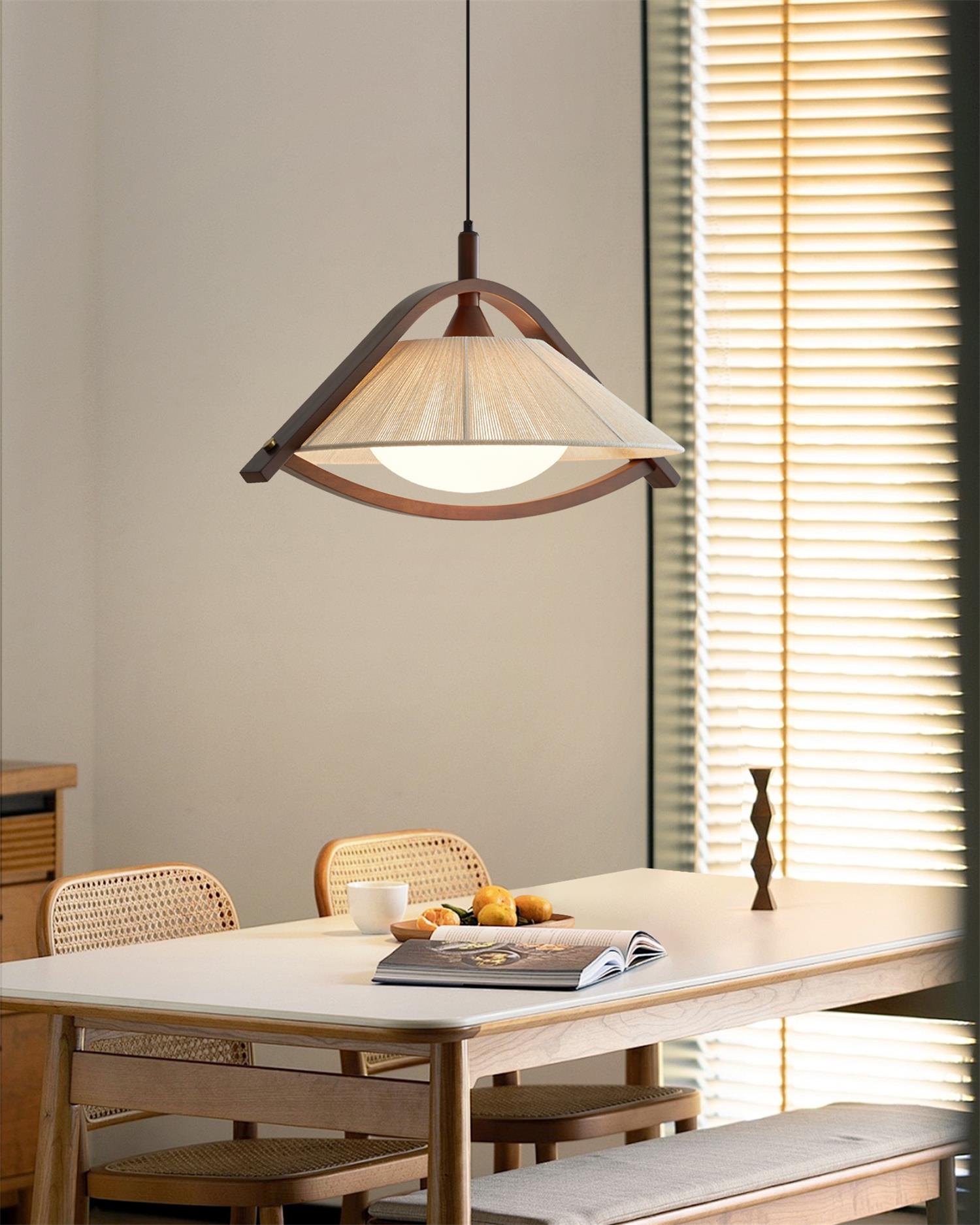
قد يكون الهيكل من المعدن أو الخشب أو مادة مستقرة أخرى، لكن وظيفتها واحدة: توفير شيء يتبعه حبل القطن. بدون هذا الهيكل، لن يشكل حبل القطن قبة نظيفة أو أسطوانة أو فانوس أو ظل معلق. سيسقط ببساطة.
هذا هو الجزء الأول المهم من الحرفة. القطن يخلق النسيج، لكن الهيكل يقرر الشكل الخارجي. الهيكل الدائري ينتج ظلاً أنعم وأكثر امتلاءً. الهيكل المستقيم يعطي القطن خطاً أنظف وأكثر معمارية. حلقة سفلية أوسع تسمح للشرابة بالسقوط بشكل أكثر انفتاحاً، بينما يحافظ الهيكل الأضيق على القطعة بأكملها مضغوطة.

مصباح قطني مصنوع بعناية لا يجب أن يبدو بلا شكل. حتى عندما يبدو مسترخياً، هناك عادة هيكل واضح تحته يحافظ على كل شيء في مكانه.
يتصرف القطن بشكل مختلف عن الألياف الطبيعية الأخرى.

لديها سطح أنظف، لمسة أناقة، وسقوط أكثر مرونة. هذا يجعلها مفيدة بشكل خاص لعقد الماكراميه والإطارات الملفوفة والتفاصيل المضفرة والشرابة. القطن أيضاً يتقبل جيداً الألوان البيضاء الدافئة والعاجية، وهذا هو السبب في أن العديد من مصابيح القطن تشعر بأنها أخف وزناً وأناقة من المصابيح المصنوعة من ألياف أكثر خشونة.
هذا يهم لأن المادة تغير الشخصية النهائية للمصباح. عادة ما يشعر ظل حبل القطن بأنه أكثر هدوءاً وتحسناً. يضيف كسر القطن حركة دون أن يبدو ثقيلاً جداً. عندما تكون الألياف سميكة بما يكفي، فإنها تخلق نسيجاً مرئياً؛ عندما تكون أرق، يشعر المصباح بأنه أكثر حساسية.
أفضل إضاءة القطن تستخدم هذه النعومة دون السماح للقطعة بالانهيار بصرياً. يجب أن تشعر بأنها مشكلة ومتوازنة وعازمة.
بمجرد أن يكون الإطار جاهزاً، يبدأ عمل القطن.
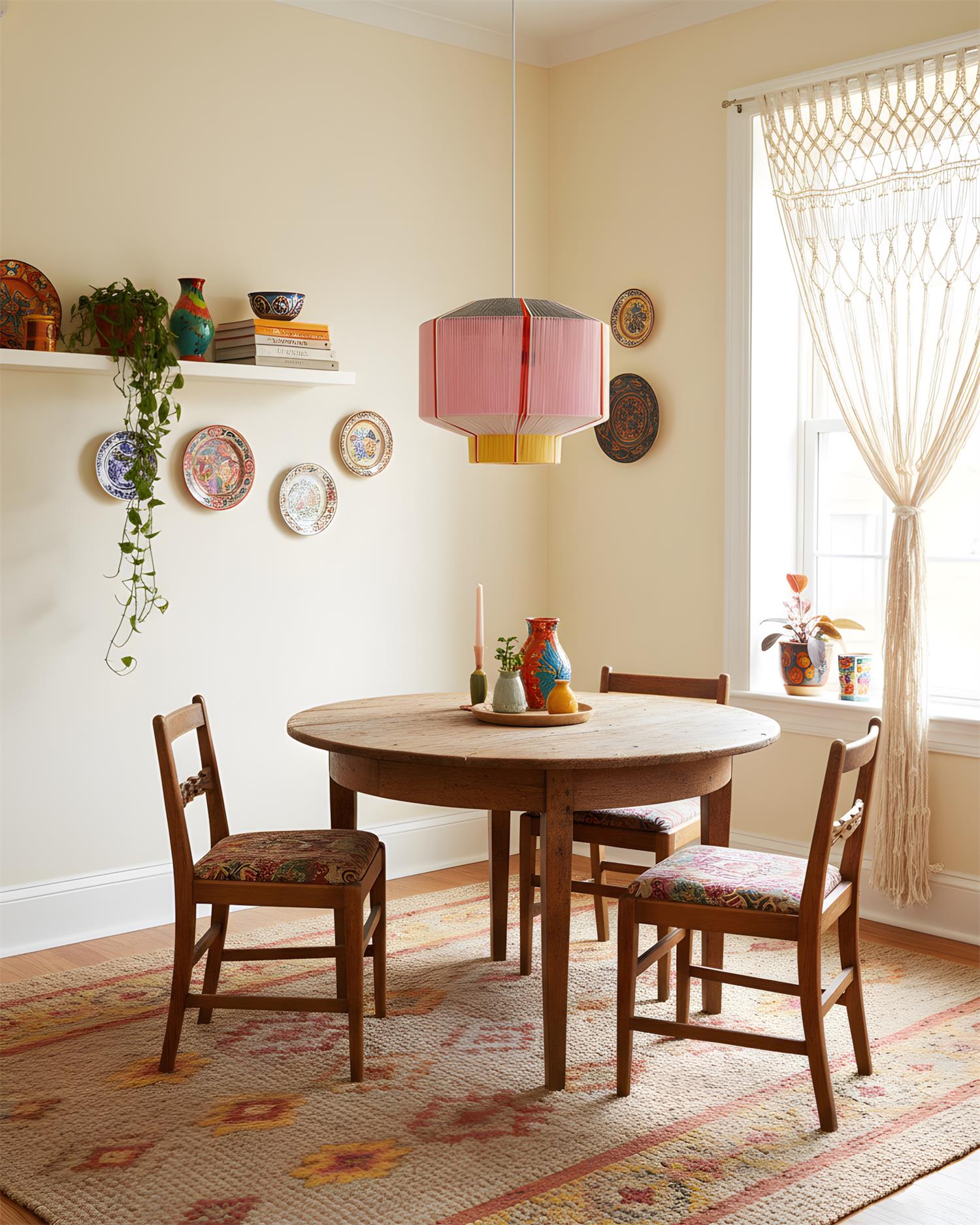
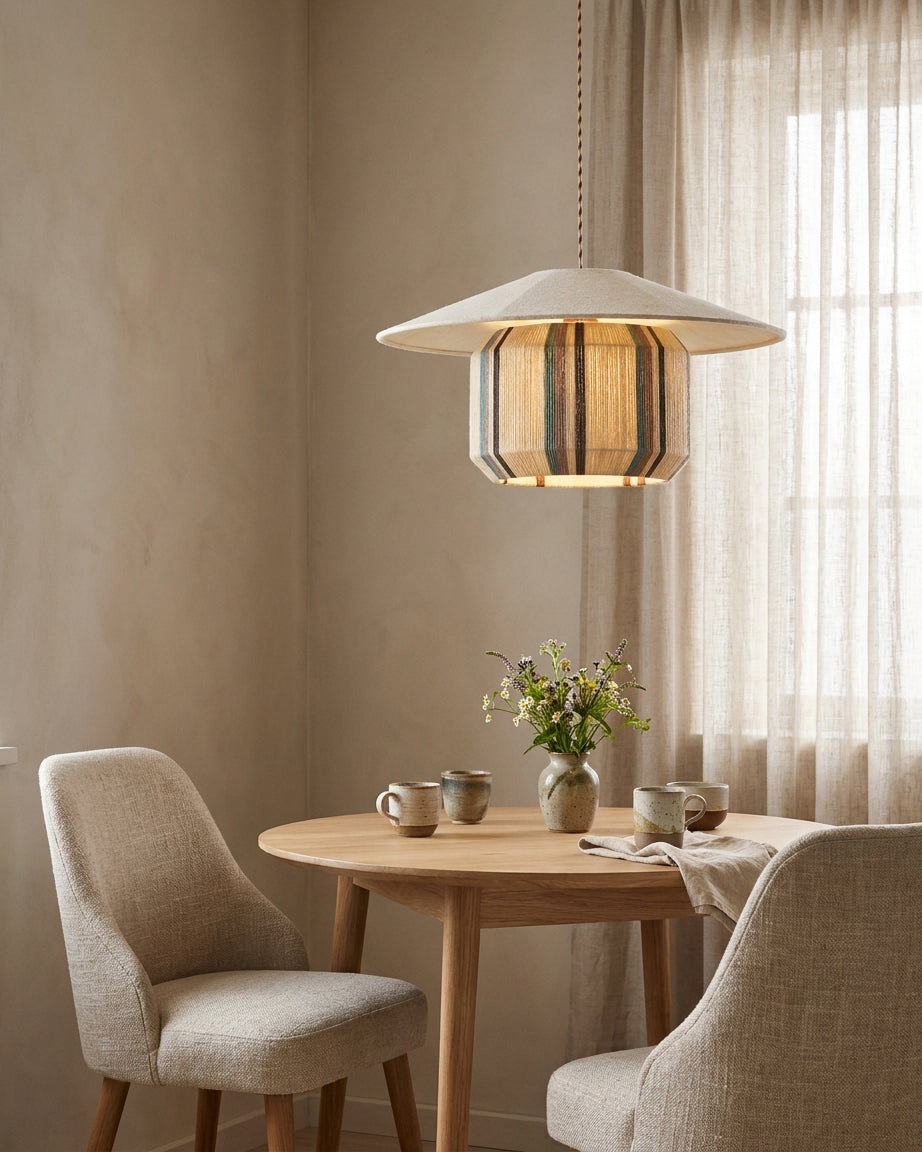
بعض المصابيح ملفوفة، مع حبل القطن يتحرك حول الإطار في خطوط متكررة. يستخدم آخرون تقنيات عقدة، حيث يتم ربط القطن في أنماط تخلق بنية وزينة على حد سواء. غالباً ما تعتمد إضاءة ماكراميه على هذا التوازن: يجب أن تكون العقد آمنة بما يكفي لتثبيت الشكل، لكن فضفاضة بما يكفي لمنع المادة من البدو الصلبة.
هذه المرحلة هي حيث يصبح العمل اليدوي مرئياً. يجب على الصانع الحفاظ على التباعد متساوياً، والتحكم في اتجاه الحبل، والتأكد من أن النمط يتبع الإطار بدلاً من محاربته.

يمكن لمصباح القطن أن يبدو عارضاً، لكن هذا الشعور العارضي عادة ما يتم إنشاؤه من خلال التكرار الدقيق. إذا كان التباعد غير متساوٍ بالطريقة الخاطئة، قد يبدو الظل فوضوياً. إذا تم سحب العقد بإحكام شديد، يفقد المصباح نعومته. الحرفية في إيجاد النقطة الوسطى.
التوتر هو أحد أهم أجزاء صناعة مصابيح القطن.
يجب سحب حبل القطن بقوة كافية للبقاء في مكانه، لكن ليس بإحكام شديد بحيث يصبح الظل صلباً. هذا مهم بشكل خاص على الإطارات المغطاة وأقسام الماكراميه. قد يسبب التوتر الضعيف الترهل. قد يؤدي الكثير من التوتر إلى تشوه الإطار أو جعل نمط القطن يبدو متوتراً.
التوتر الجيد هو شيء تشعر به قبل أن تلاحظه. تجلس الخطوط بالتساوي. تحتفظ العقد بشكلها. تسقط الشرابة من حافة مستقرة. يشعر المصباح بأنه مصنوع يدوياً، لكن ليس بشكل غير منضبط.

هذا أيضاً هو السبب في أن القطع المصنوعة يدوياً من القطن قد تظهر اختلافات طفيفة من واحدة إلى أخرى. قد تجلس عقدة بطريقة مختلفة قليلاً، أو قد تسقط خيط بحركة مختلفة قليلاً. عندما يكون الهيكل العام نظيفاً، تضيف هذه الاختلافات الصغيرة إلى الجودة الطبيعية للقطعة.
شرابة القطن من أسهل التفاصيل التي يجب ملاحظتها، لكنها ليست مجرد قص وترك وحدها.
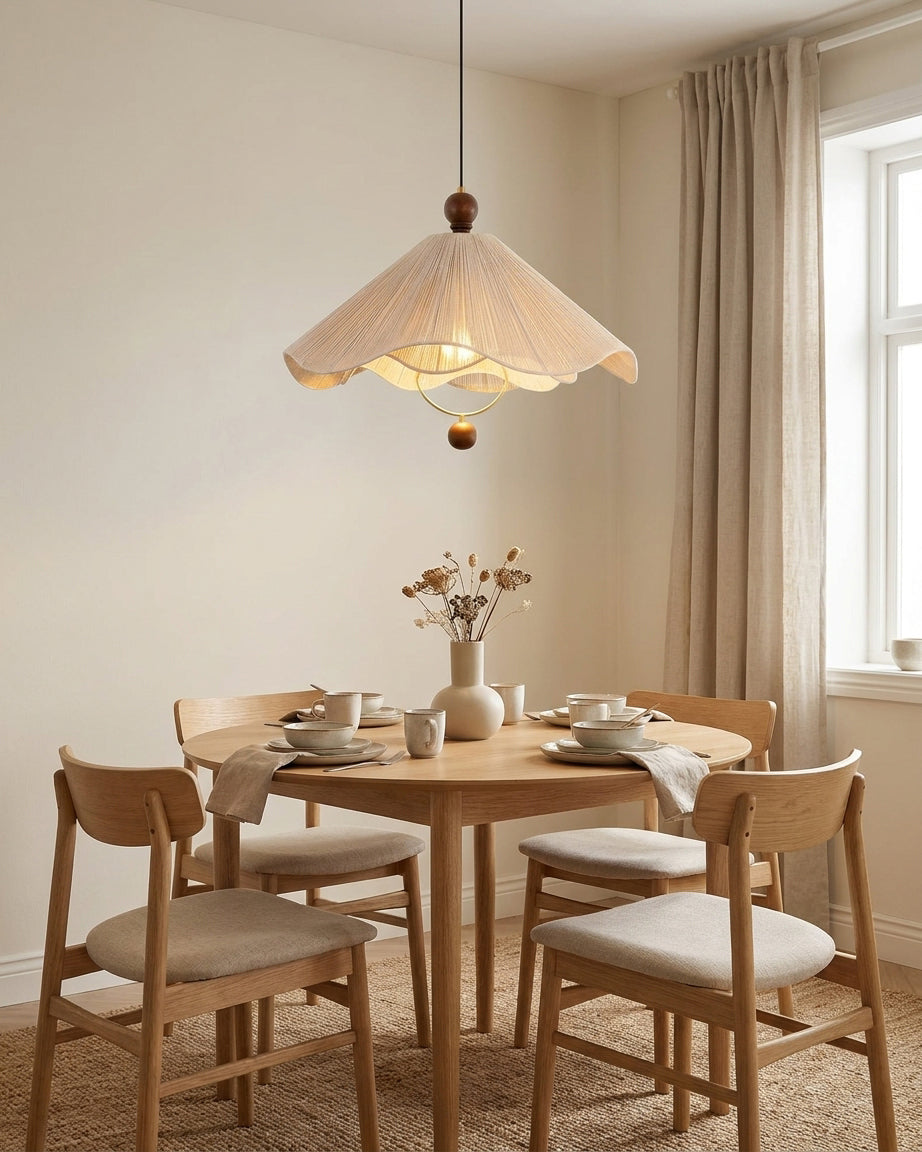
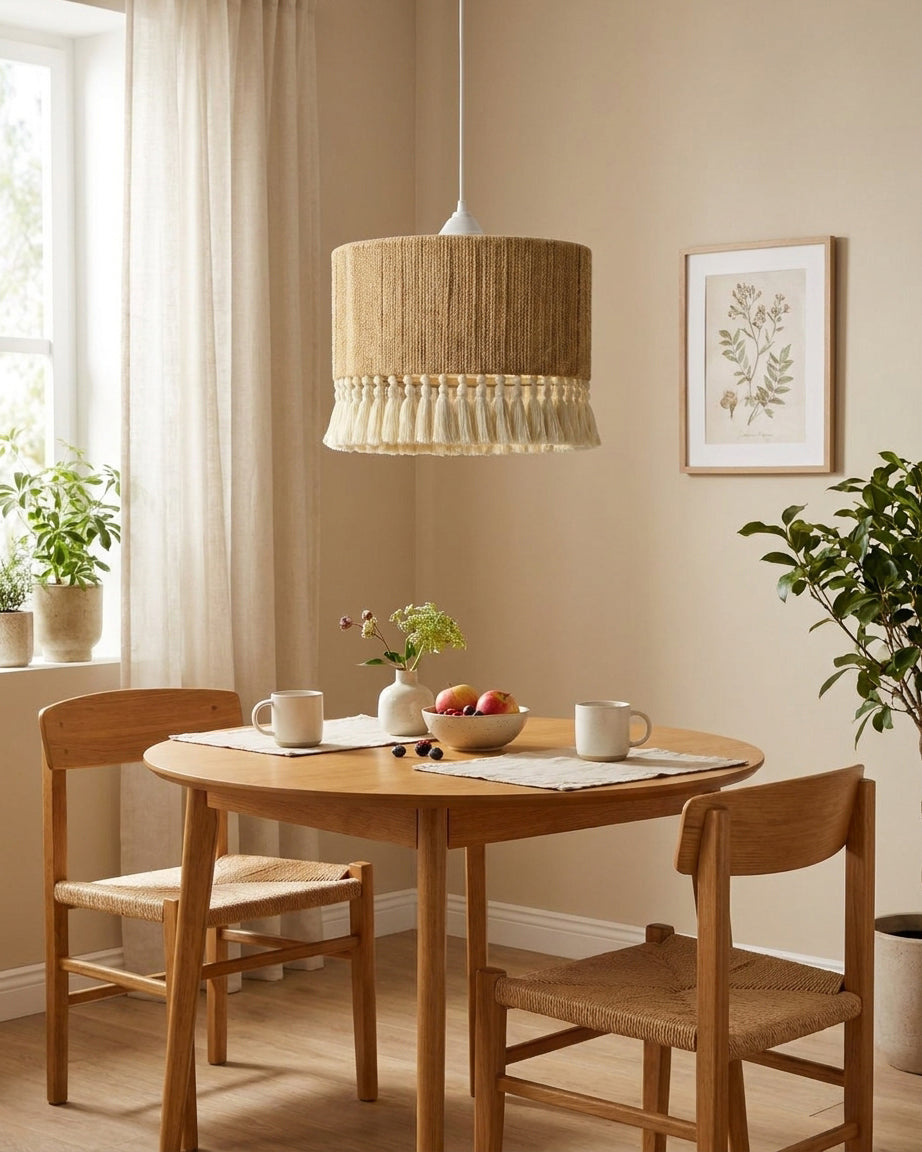
بعد إرفاق خيوط القطن، غالباً ما تحتاج إلى تمشيطها وفصلها وتقليمها حتى تسقط الحافة بشكل صحيح. يجب أن يطابق الطول شكل المصباح. الشرابة القصيرة تشعر بالنظافة والدقة. الشرابة الأطول تخلق حركة أكثر وخطوطاً أناقة. يمكن للشرابة الطبقية أن تجعل الظل يشعر بأنه أكثر امتلاءً، لكنها أيضاً تحتاج إلى مستويات أكثر حذراً.

الحافة السفلية مهمة بشكل خاص لأنها ما يراها الناس عندما يكون المصباح معلقاً فوق الرأس أو على مستوى العين. إذا كانت الشرابة رقيقة جداً، قد تبدو غير مكتملة. إذا كانت كثيفة جداً، فقد تشعر بثقل وتمنع الكثير من الضوء.
يجب أن يكون مصباح القطن ذو الشرابة الجيدة جسماً كافياً ليشعر بالقصد، مع السماح للمادة بالحركة بشكل طبيعي.
مصباح القطن لا يكتمل إلا عندما يتم اختباره بالضوء.
القطن لا ينعكس عليه الضوء مثل المعادن أو الزجاج. إنه يفلتره. يمر بعض الضوء عبر الألياف، وينتص البعض الآخر، وينزلق بعضها عبر المناطق المفتوحة بين الحبال أو العقد. هذا ما يعطي إضاءة القطن توهجها الناعم.

كثافة عمل القطن تغير النتيجة. النسج الأكثر إحكاماً يخلق ضوءاً أدفأ وأكثر احتواءً. نمط عقدة أكثر انفتاحاً يرسل ظلالاً دقيقة. تنعم الشرابة الحافة السفلية للتوهج وتجعل الضوء يبدو أقل مباشرة.
هذا هو السبب في أن مصابيح اللون الأبيض الدافئ عادة ما تعمل بشكل أفضل. المصباح حول 2700K إلى 3000K يساعد القطن على الحفاظ على لونه الدافئ والطبيعي. المصابيح الأكثر برودة يمكن أن تجعل الألياف تبدو رمادية أو قاسية، خاصة في الظلال الكريمية أو العاجية.
بالنسبة لإضاءة القطن، يجب أن تدعم المصباح المادة. الهدف ليس فقط السطوع، بل نوع التوهج المفلتر الصحيح.
عند النظر إلى مصباح القطن، الشكل الكامل هو الذي يهم أولاً. يجب أن يشعر بالتوازن من مسافة بعيدة، مع اتباع القطن للإطار بنظافة.

ثم انظر بعناية أكثر. يجب أن تشعر العقد بالأمان. يجب أن يكون للأقسام المغطاة إيقاع. يجب أن يكون للشرابة وزن كافٍ لتسقط بشكل جميل. يجب أن تبدو الحافة منتهية بدلاً من أن تكون عرضية. إذا كان المصباح يستخدم طبقات، يجب أن تشعر بأنها متصلة بالهيكل، وليست مضافة كزينة في اللحظة الأخيرة.
أفضل مصابيح القطن تشعر بالنعومة، لكنها ليست بلا عناية. إنها تظهر يد الصانع دون أن تبدو غير مكتملة.
هذا هو الفرق بين مصباح يستخدم ببساطة القطن ومصباح مبني حول شخصية القطن.
لإضاءة القطن سحر محدد جداً لأنها تغير شعور المصباح.
يمكن أن تشعر المصباح العادي بالمباشرة. درجة القطن تلينها. يمكن أن يشعر الإطار البسيط بالقسوة. يعطي لف القطن الملمس. يمكن أن تشعر شكل المصباح المعلق النظيف بأنه أكثر شخصية عندما يكون للمادة عقد أو خيوط أو شرابات مرئية.
هذا هو السبب في أن مصابيح القطن تعمل بشكل جيد جداً في الديكور الداخلي المريح. إنها تجلب الحرفية دون الشعور بالثقل. تضيف الملمس دون الاعتماد على لون قوي. تجعل الضوء يشعر بالدفء والبطء والملمس أكثر.
قيمة مصباح القطن لا تكمن فقط في الشكل النهائي. إنها في العملية وراءها: الإطار الذي يحمله، والحبل الذي يبني السطح، والتوتر الذي يحافظ على توازنه، والشرابة التي تعطيه الحركة، والضوء الدافئ الذي يحيي الألياف.
استكشف إضاءة القطن والألياف الناعمة في DOCOS، وجد القطع حيث تعمل الملمس والحرفية والتوهج معاً.
سيتم الموافقة على التعليقات قبل ظهورها.


